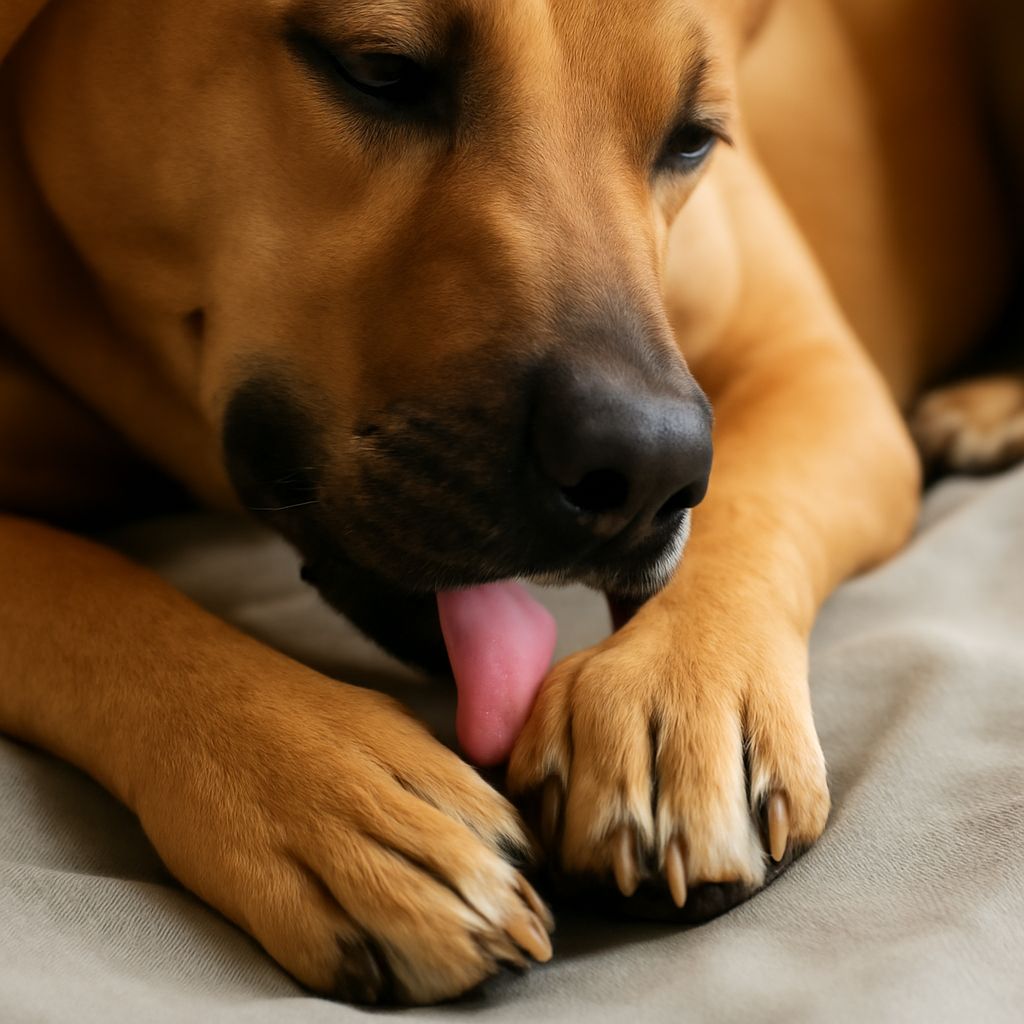
Many dog owners face the perplexing issue of their dog chewing its paws incessantly. It’s a common myth that this behavior always indicates a serious health problem. In reality, while some dogs lick their feet due to medical reasons, others might do so out of habit or anxiety. Understanding why your dog keeps licking one paw can help you find an effective solution to stop the behavior.
Another misconception is that using any dog chewing deterrent will instantly stop this behavior. However, it’s crucial to identify the underlying cause to determine the most appropriate deterrent. From allergies to boredom, various factors can lead to a dog chewing on its foot, and each requires a tailored approach.
Why Does My Dog Keep Chewing Its Paws?
There are numerous reasons why a dog might be chewing its paws. Allergies, whether environmental or food-related, are common culprits. Allergic reactions can cause irritation, leading your pet to lick and chew its paws incessantly. Additionally, injuries or foreign objects stuck in the paw can also prompt this behavior.
Behavioral issues like anxiety or boredom can also lead to excessive licking and chewing. Dogs that are anxious may chew on their paws as a comfort mechanism. Meanwhile, a dog that lacks mental and physical stimulation might resort to paw chewing as a way to entertain itself.
Common Reasons Dogs Lick Their Feet
Dogs licking their feet can stem from various causes. Parasites such as fleas or ticks can make your pet’s skin itchy, prompting them to lick their paws excessively. Additionally, yeast or bacterial infections are often responsible for this persistent issue.
Environmental factors such as walking on salty roads during winter or coming into contact with lawn chemicals can also irritate a dog’s paws. These irritants can cause discomfort, prompting your dog to lick and chew its feet in an effort to alleviate the irritation.
Is Your Dog Chewing on One Foot? Here’s Why
If your dog keeps licking one paw specifically, it might be due to an injury or localized irritation. Check for cuts, splinters, or other foreign objects lodged in the paw that might be causing discomfort. Additionally, growths or cysts could be the source of the issue if your dog focuses on one paw.
Localized infections, such as interdigital cysts or fungal infections, often cause a dog to target a single paw. In such cases, it is essential to keep the affected area clean and monitor for any signs of worsening conditions.
Effective Dog Chewing Deterrents
Once you’ve identified the cause of your dog’s behavior, using the appropriate dog chewing deterrent can be effective. For issues related to allergies, consulting a veterinarian for a hypoallergenic diet or medication may be necessary. Implementing physical barriers like booties can protect the paws and reduce the inclination to chew.
If behavioral issues are at play, increasing your dog’s mental and physical activity can be beneficial. Providing toys, engaging in regular playtime, and employing training techniques can redirect their focus away from chewing their feet.
When to Consult a Vet About Paw Chewing
Persistent paw chewing that fails to improve with home remedies warrants a visit to the veterinarian. If your dog exhibits additional symptoms like redness, swelling, or limping, it’s crucial to seek professional advice. Licensed veterinarians can conduct thorough examinations to diagnose any underlying health problems accurately.
Complex cases involving severe infections, unusual growths, or intense allergic reactions need medical intervention. A vet can prescribe medications or recommend treatments to address these issues effectively, ensuring your dog’s health and well-being.
Safety Recap: Always supervise the use of deterrents and consult a veterinarian for any severe or persistent issues. Monitoring your dog’s behavior and ensuring they receive adequate care can significantly reduce the occurrence of paw chewing.