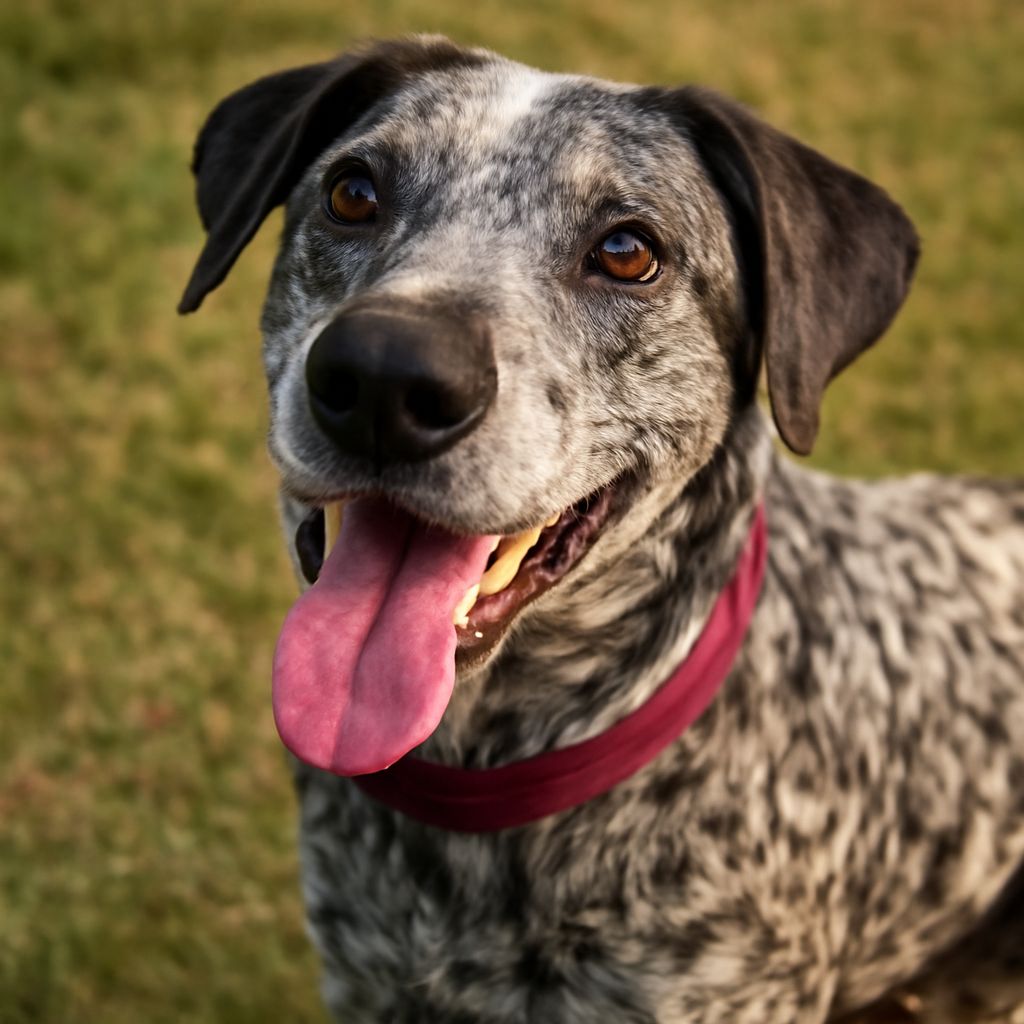
A shelter listing describes a Catahoula Leopard Dog cross, and the spotted puppy in the photo has already caught your eye. Before buying a bed or planning long hikes, ask what the shelter knows about the puppy’s parents, health, and behavior. The puppy can grow into a very different companion from the dog you imagined from a picture.
Catahoula Mix labels and what they mean
A catahoula leopard dog mix has a Catahoula in its ancestry alongside one or more other kinds of dog. A listing may reflect known parentage, a DNA estimate, or an educated guess based on appearance. Ask which one applies. Records or information about known parents give you more to work with than a label assigned from a photograph.
You might also see the name Catahoula working cur. “Cur” has been used for working dogs and appears in names associated with this breed; the word alone does not establish that a dog is mixed. The United Kennel Club recognizes the Louisiana Catahoula Leopard Dog as a breed with a history as a versatile working dog. A dog bearing that designation may be purebred, mixed, or of uncertain background; the name by itself cannot settle the question.
A catahoula leopard hound mix label may suggest a Catahoula and a hound, but ask which hound and what evidence supports the pairing. “Leopard” also appears in the name of the distinct American Leopard Hound, so the wording can be ambiguous. A DNA test may offer another clue, though estimates depend on the test and its reference data. Discuss surprising results with the provider or your veterinarian.
How big will the dog get?
For context, the UKC standard gives a weight range of 50 to 95 pounds for the breed, with adult height and weight in proportion. That is a reference for the breed, not a reliable adult-size range for every cross. The other parent’s size and the puppy’s individual inheritance matter, and unknown parentage leaves a wider guess.
Ask for the parents’ adult weights if known, the puppy’s age and current weight, and a veterinarian’s growth assessment. A shelter’s estimate can help you plan, but leave room in your budget for a larger crate, stronger leash, and higher food costs. An adult foster dog has an advantage here: you can meet the full-size version before deciding whether the dog fits your space and handling ability.
Coat, grooming, and health
The breed standard describes a close-fitting coat ranging from short to medium in length, with smooth or coarse texture. A cross can inherit a different coat from the other side of its family. A short coat still sheds; longer or denser hair can need more frequent combing, especially behind the ears and where a harness sits.
Brush regularly enough to remove loose hair and spot tangles, and check nails, ears, skin, and teeth. Ask a groomer to show you a comfortable brushing technique if the dog squirms. Start handling paws for a few seconds at a time, reward cooperation, and build up gradually. Your vacuum may become a more involved member of the family.
Pattern offers no reliable family tree. The UKC describes solid, brindle, patchwork, and leopard patterns in the breed, and spotted coats occur in other dogs too. If you are considering a dog with a mostly white coat or known merle ancestry, ask the veterinarian about hearing and vision assessment. Hearing loss can be missed when a dog responds to movement or vibration. A dog with hearing or vision differences can still learn and enjoy family life; you may need visual cues, a secure environment, and a care plan tailored to its needs.
Activity and training in the real world
Working ancestry can be a reason to prepare for an active, observant dog. It is not a promise that every individual will need the same amount of exercise or behave the same way around strangers. Ask the foster caregiver how the dog settles after a walk, reacts to visitors, and behaves when left alone. A brief meeting in a quiet room may reveal less than a walk and a report from daily life.
Start with daily walks, sniffing opportunities, play, and short reward-based training sessions. Increase activity gradually according to age, fitness, and veterinary advice. Teach a mat settle as well as a recall: reward the dog for relaxing on the mat, then practice in slightly busier settings. Food puzzles and scent games can make rainy days more interesting, but they work best alongside appropriate movement and rest.
The energy of a catahoula mix with a Leopard Dog parent can vary widely. One adult may enjoy a moderate walk and a nap; another may need longer outings and structured activities. Watch for persistent pacing, difficulty settling, or frustration, then adjust the routine and consult a trainer or veterinarian if the pattern continues. For puppies, avoid demanding repetitive exercise and let them rest between short play sessions.
Children, pets, and choosing a puppy
A dog with Catahoula Leopard Dog parentage may show interest in chasing or controlling movement, but its response to children, cats, and other dogs depends on the individual and its experiences. Ask for specific examples: Has the dog lived with a cat? What happened when a child ran past? Arrange gradual introductions with barriers and an escape route for smaller animals. Supervise children and teach them to leave a resting or eating dog alone.
Listings for catahoula cur puppies should prompt questions about the mother, known father, early care, vaccination and deworming records, and the environment where the litter was raised. Meet the mother when possible and observe how the puppies approach people and recover from ordinary new experiences. No single visit can predict adult behavior, so look for a caregiver who can describe each puppy over time and answer questions about health.
Before committing, compare the particular dog’s needs with a normal week: who will walk, train, feed, and supervise it, and where will it rest while the family is busy? If the current caregiver can describe a routine your household can repeat, you have a practical foundation for the next meeting.