Heimlich Maneuver Dog: How to Help a Choking Dog Safely
Knowing the heimlich maneuver dog technique can save your pet’s life in a choking emergency, but many owners have never learned it or assume it works exactly like the human version. It does not. The canine approach differs by body position and pressure points. Separately, how many hairs on a dog is a question that comes up surprisingly often, usually because owners notice excessive shedding. Performing the heimlich maneuver on a dog requires calm hands and specific technique. The term heimlich dog is shorthand for this life-saving abdominal thrust method. And while knowing how should you place a prong collar on a dog is useful for training, no collar prevents choking emergencies, which is why first aid knowledge matters independently.
This article covers the canine Heimlich technique step by step, identifies common choking hazards, and explains when to call an emergency vet rather than attempting intervention at home.
How to Perform the Heimlich Maneuver on a Dog
The steps vary depending on whether your dog is standing, lying down, or small enough to hold. For a standing medium or large dog, kneel or stand behind the dog. Place both fists just below the rib cage in the soft area of the abdomen. Apply firm, quick upward thrusts, repeating 3 to 5 times. After each set, check the mouth to see if the object has dislodged, and remove it if visible and accessible.
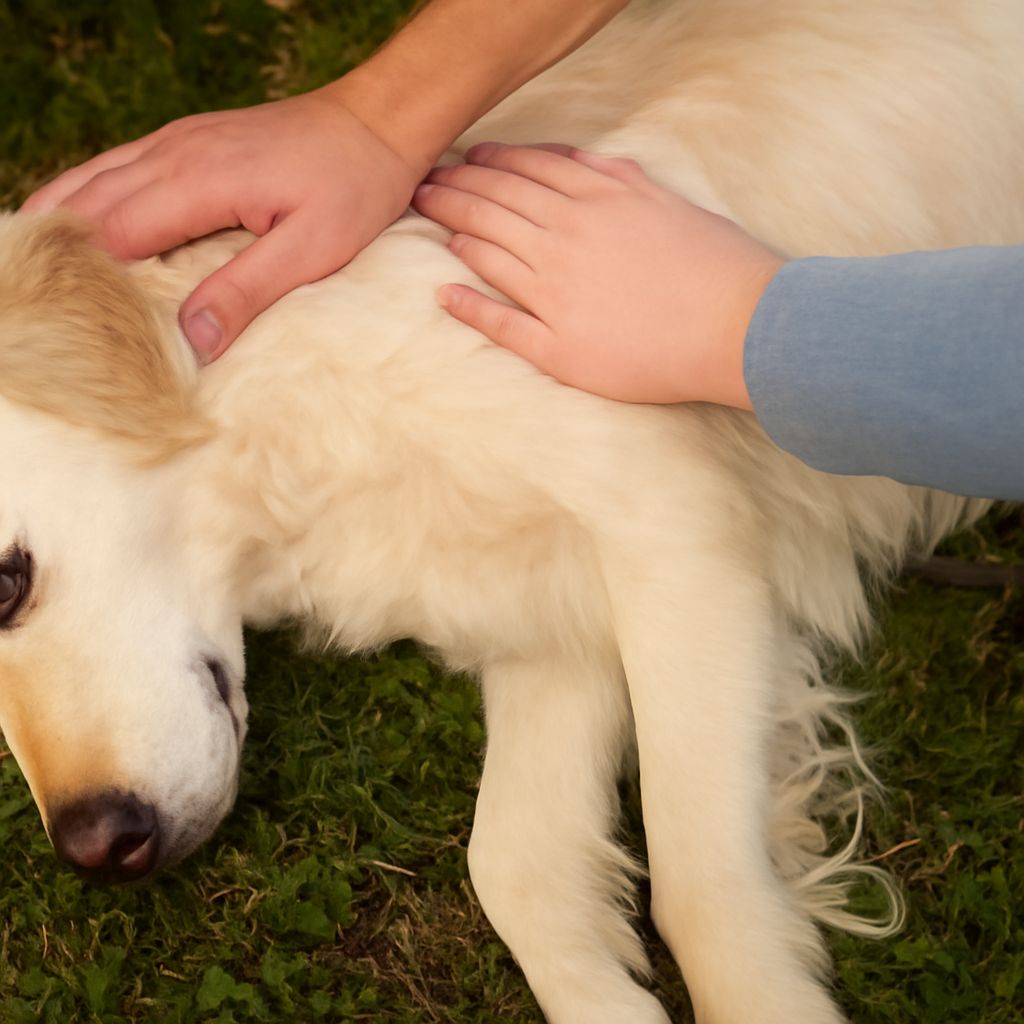
For a small dog, hold the animal with its back against your chest. Use two fingers to apply firm upward pressure on the abdomen just behind the rib cage. For a dog lying on its side, place one hand on the dog’s back for support and use the other to apply quick inward-and-upward pressure on the abdomen. The abdominal thrust for canines always moves upward and inward, not straight in.
Step-by-Step for Standing Dogs
- Position yourself behind the dog
- Find the soft spot below the last rib
- Form a fist with one hand, cover with the other
- Apply 3 to 5 firm upward thrusts
- Check the mouth and remove any visible obstruction
- Repeat if needed and call your vet immediately
Choking Hazards and Prevention
Dogs choke most often on hard treats, bones, balls, and small toys that fit partially into the throat. Round objects are especially dangerous because they can seal the airway. Common culprits include rawhide that softens into large wads, marrow bones where the jaw gets stuck, hard rubber balls slightly too small for the dog’s mouth, and corn cobs.
After performing the heimlich on a dog, always follow up with a veterinary visit even if the dog appears fine. Internal bruising from the thrusts needs assessment, and there may be residual airway irritation. The emergency maneuver is a bridge to professional care, not a substitute for it.
What About Shedding and Prong Collars?
How many hairs does a dog have? The answer ranges from about 15,000 on short-coated breeds to over 60,000 on thick double-coated dogs. Excessive shedding beyond normal seasonal patterns can indicate skin conditions, nutritional deficiencies, or hormonal issues worth discussing with a vet.
Regarding how should you place a prong collar on a dog: a prong collar should sit high on the neck, just behind the ears, where it has the most leverage and least risk of tracheal injury. It should be snug enough to not slip down but not so tight it pinches at rest. A certified professional dog trainer can demonstrate correct placement and assess whether a prong collar is appropriate for your specific dog.
Key takeaways: The canine Heimlich technique differs from the human version and requires knowing your dog’s size and position. Choking is preventable with the right toy and treat choices. Always follow any home emergency intervention with a veterinary visit to rule out internal injury.