Dog Potty Bell Training, Dog Moccasins, Window Benches, and Pet Furniture Essentials
A dog potty bell system gives dogs a clear, consistent way to communicate the need to go outside — a significant improvement over ambiguous whining, door-scratching, or sitting near the door without any owner noticing. Dog moccasins address a real winter welfare issue: the combination of ice, road salt, and freezing pavement causes paw pad cracking, chemical burns, and contact dermatitis in dogs without proper paw protection. A dog window bench provides a dedicated elevated viewing position that satisfies the natural watchdog tendency in dogs while protecting furniture from claw marks and keeping hair concentrated in one cleanable space. Dog proposals — the trend of including a dog in a marriage proposal — have become a meaningful way to acknowledge a pet’s role in the couple’s relationship. A pet bunk bed maximizes vertical space in households with multiple animals, giving each a dedicated sleeping area and reducing resource-related conflict.
Teaching a Dog to Use a Potty Bell
Bell Training Steps
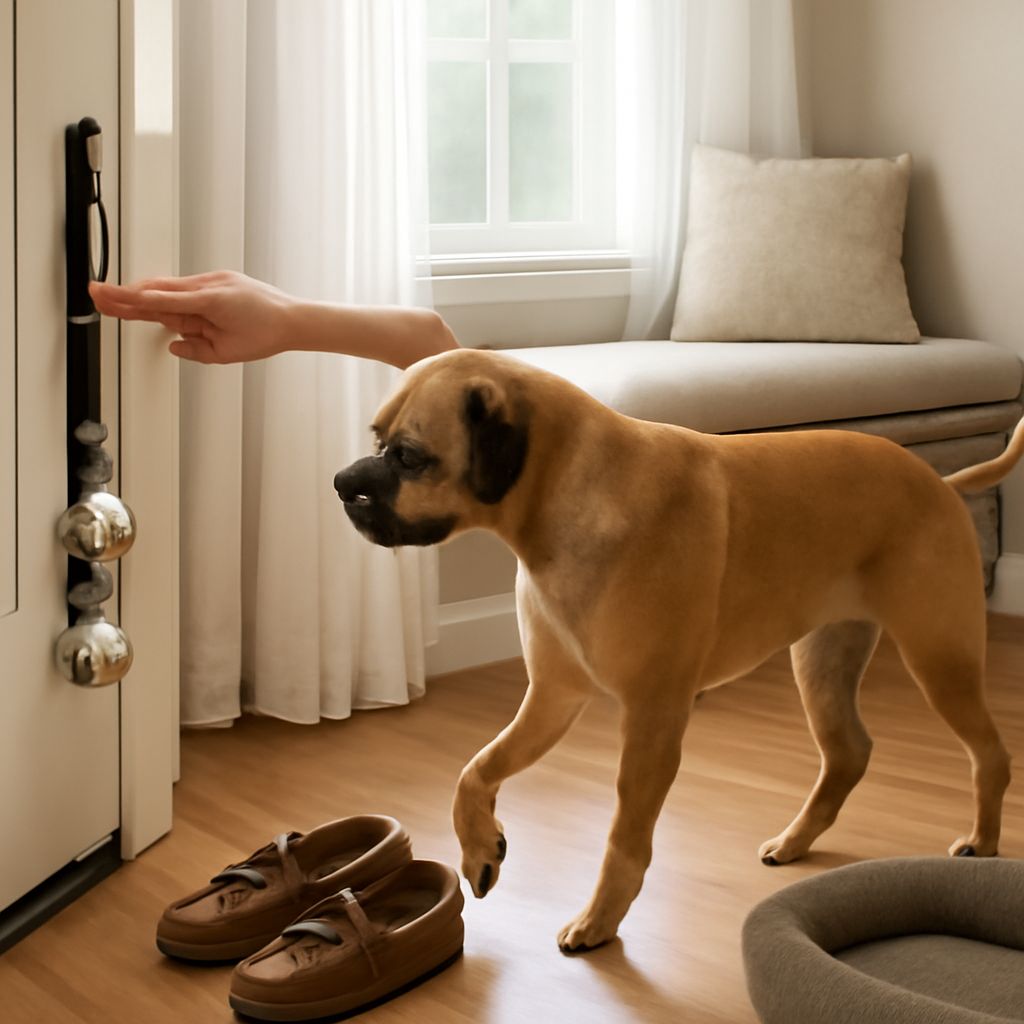
Hang a bell or set of bells at nose height beside the door used for outdoor elimination. Every time you take the dog out, guide their nose or paw to ring the bell immediately before opening the door. Repeat without exception for every outdoor trip for 2 to 4 weeks. The dog learns to ring the bell to produce the outdoor-access outcome. Once the association is established, the dog will ring voluntarily when needing to go out. Address false alarms — ringing without needing to eliminate — by returning inside immediately without play or extended outdoor time.
Common Bell Training Mistakes
The most common mistake is inconsistency — skipping the bell ritual during some trips teaches the dog that the bell is optional. Reinforcing false rings with play time instead of quick returns to the door inadvertently teaches the dog to use the bell for outdoor entertainment rather than elimination signaling. Keep the training consistent across all household members.
Dog Moccasins and Paw Protection in Winter
Dog boots or moccasins must fit snugly enough to stay on during movement but not so tightly that they restrict blood flow. Measure the width of the paw pad when the dog is bearing weight — this is wider than when lifted. A properly fitted dog moccasin should allow the dog to splay their toes naturally. Most dogs require an acclimatization period — introduce boots indoors for short sessions before outdoor wear. Paw balm applied after walking in salt provides additional protection and soothes minor chemical irritation.
Dog Window Bench and Pet Bunk Beds
A dog window bench is most functional when built at a height that gives the dog a clear sightline to the yard or street. A sturdy platform with non-slip surface and washable cushion cover reduces cleanup burden. For multi-pet households, a pet bunk bed provides distinct sleeping levels that reduce competition for sleeping spots. Units with removable and washable covers in both upper and lower berths simplify hygiene maintenance.
Key takeaways: Bell training gives dogs a communication tool that reduces accidents and frustration. Paw moccasins protect against winter hazards when properly fitted. Window benches and bunk beds address watching needs and multi-pet logistics practically and comfortably.