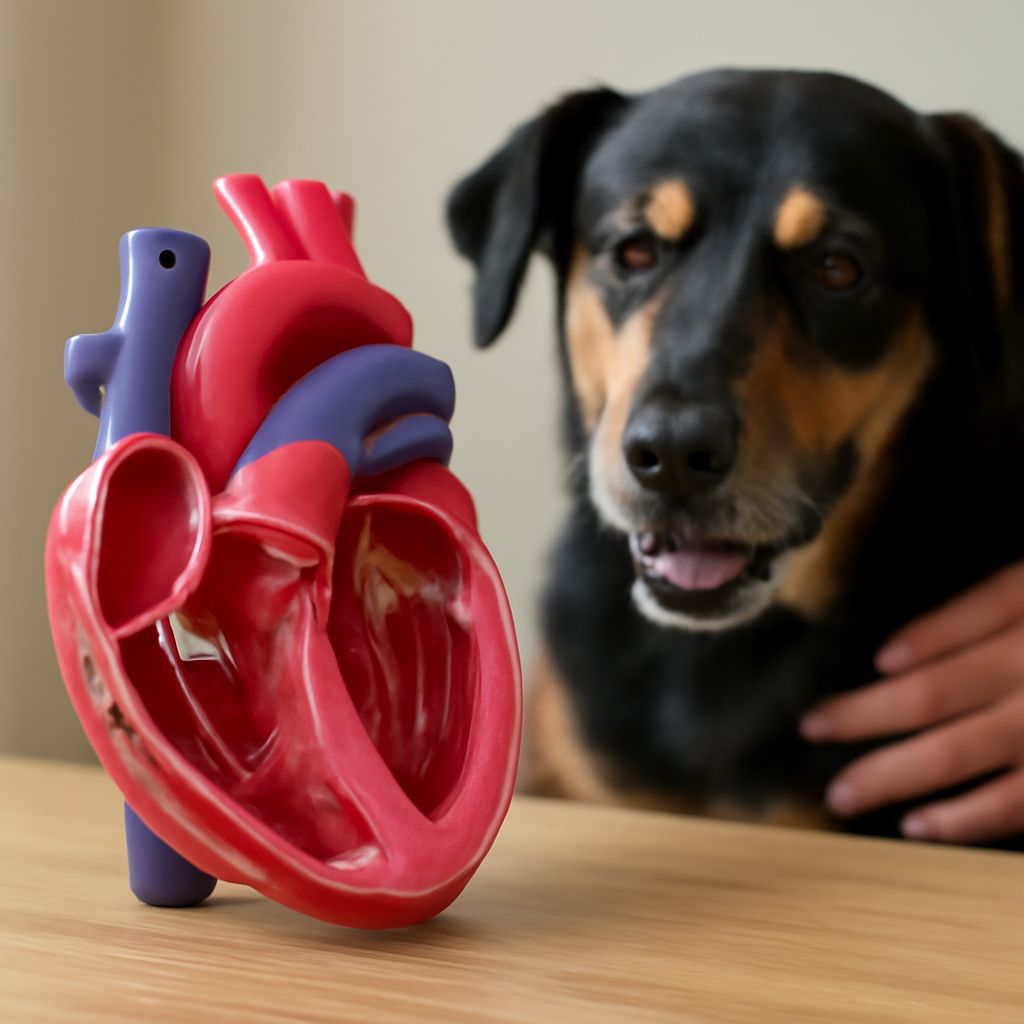
Dog Heart Murmur: Symptoms, Grading, and How to Care for Your Dog
A dog heart murmur diagnosis sounds frightening, but it does not automatically mean your dog is in danger. Many dogs live for years with low-grade murmurs that require only periodic monitoring. Dog pee pad use by older dogs with cardiac issues often reflects the fatigue and reduced mobility that comes with heart disease rather than a bladder problem. Dog overalls and mobility harnesses serve a similar purpose — supporting dogs whose exercise tolerance has declined due to cardiovascular changes.
Dog heart murmur symptoms range from none at all in early stages to exercise intolerance, coughing, and labored breathing in advanced cases. A vertebral heart score dog evaluation gives veterinarians an objective measurement of cardiac enlargement from X-rays, helping track disease progression before outward symptoms become obvious.
What Is a Heart Murmur in Dogs?
A murmur is an abnormal sound produced by turbulent blood flow through the heart. It is detected with a stethoscope during a routine exam. Murmurs are graded on a scale of I to VI, with Grade I being barely audible and Grade VI audible without a stethoscope. Most dogs with grades I through III have murmurs that do not yet impair cardiac function. Grades IV through VI indicate significant turbulence and usually warrant further diagnostics including echocardiography.
Recognizing Dog Heart Murmur Symptoms
Early dog heart murmur symptoms often go unnoticed by owners. The dog seems normal, eats well, and maintains activity levels. As the murmur progresses or underlying disease advances, symptoms become apparent: reduced exercise tolerance, coughing especially at night or after lying down, faster or labored breathing, and occasionally fainting. A dog that tires quickly on walks it previously handled without difficulty warrants a cardiac evaluation.
Some dogs show subtle behavioral changes — increased use of a dog pee pad, reluctance to jump, or resting more than usual. These can all reflect the reduced stamina and comfort changes that come with early cardiac compromise. Do not dismiss these shifts as simple aging without ruling out cardiac causes.
Vertebral Heart Score and Monitoring
The vertebral heart score dog measurement compares the size of the heart on a lateral chest X-ray to the length of vertebrae in the spine. This standardized method allows vets to track whether the heart is enlarging over time, which often precedes symptomatic heart failure. Dogs at risk for breed-specific cardiac conditions, such as Cavalier King Charles Spaniels and Dobermans, benefit from regular VHS monitoring starting in middle age.
Echocardiography provides a more detailed view, showing valve function, chamber sizes, and blood flow direction in real time. A veterinary cardiologist performs this study when the murmur grade or clinical signs suggest significant disease. Early detection of enlargement allows for medication to begin before the dog becomes symptomatic, which delays the onset of heart failure by an average of several months in clinical trials.
Daily Care for Dogs with Cardiac Disease
Dogs with diagnosed heart disease benefit from moderate, consistent exercise rather than intense bursts of activity. Short, calm walks are better than long runs. Reduced sodium diets help manage fluid retention in dogs with congestive heart failure. Dog overalls and support harnesses assist dogs with weakness or reduced mobility, making daily movement more comfortable and safer.
A dog pee pad placed near the sleeping area reduces nighttime accidents for dogs whose cardiac medication increases urination. Keeping the home environment calm and minimizing physical exertion during hot weather further reduces cardiac stress. Follow your veterinarian’s guidance on medication schedules precisely — cardiac drugs work best at consistent blood levels, and missed doses can accelerate symptom progression.