Dog Tub Guide: Portable Dog Bath, Bubble Bath Safety, and Hot Tub Risks
One assumption that costs owners money and causes unnecessary stress is that a dog needs to be bathed in a full-size human bathtub. A dedicated dog tub, whether a permanent fixture or a collapsible portable dog bath, makes the process faster, less messy, and easier on your back. Dog bubble bath products look appealing but carry real risks if they’re not formulated specifically for canine skin. And the question of dog in hot tub situations comes up more than people expect, particularly in households where hot tubs are part of daily life. A pet tub designed for the purpose solves most of these problems before they start.
The myth that human shampoo is fine for dogs is widespread and genuinely harmful. Human skin has a pH of around 5.5, while dog skin runs closer to 7.5. Applying acidic human products strips the protective coat and disrupts the skin barrier, leading to dryness and irritation. The same applies to bubble bath products.
Choosing a Dog Tub or Portable Bath Setup
Fixed Dog Tubs
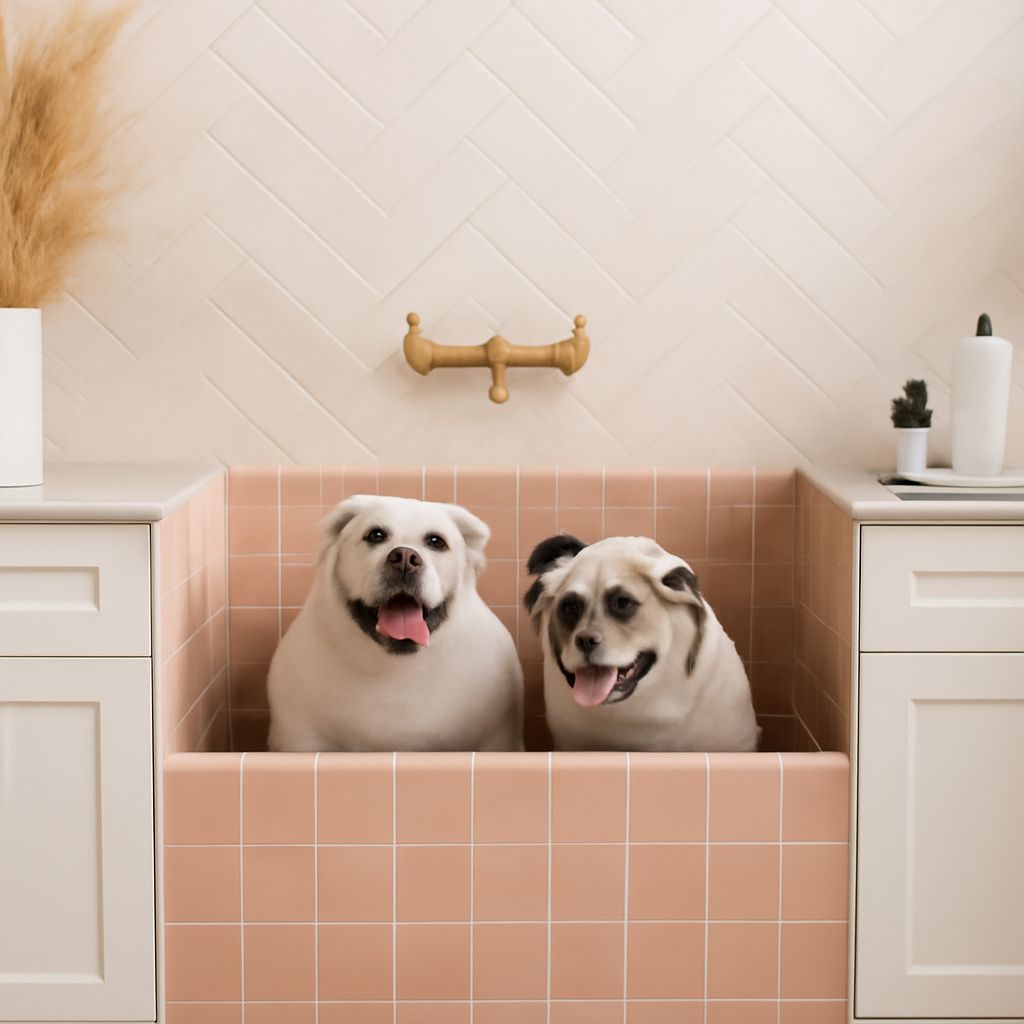
A built-in dog wash station typically sits at waist height, eliminating the need to kneel on the floor. These units include a spray attachment, drainage, and often a restraint loop. They’re common in grooming salons and increasingly available for home installation. They work best for households with large dogs bathed frequently.
Portable Dog Bath Options
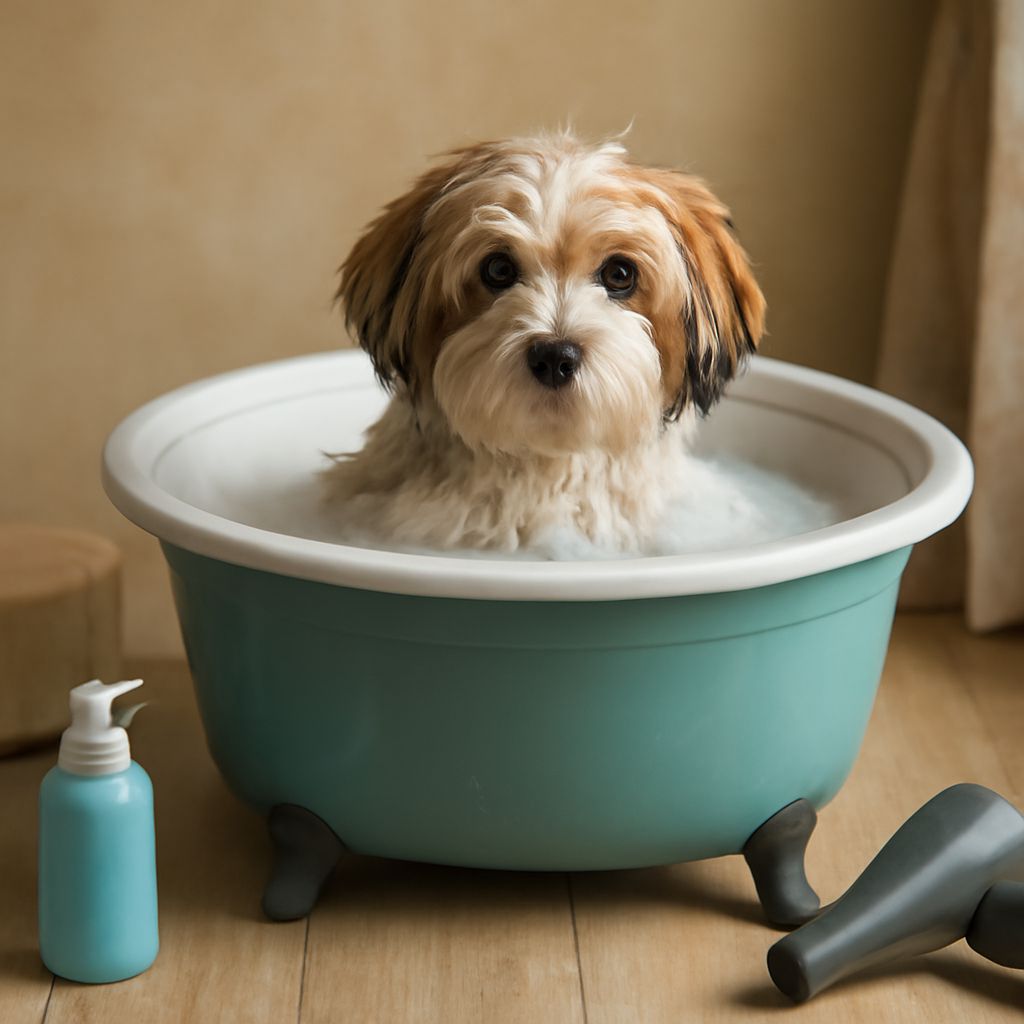
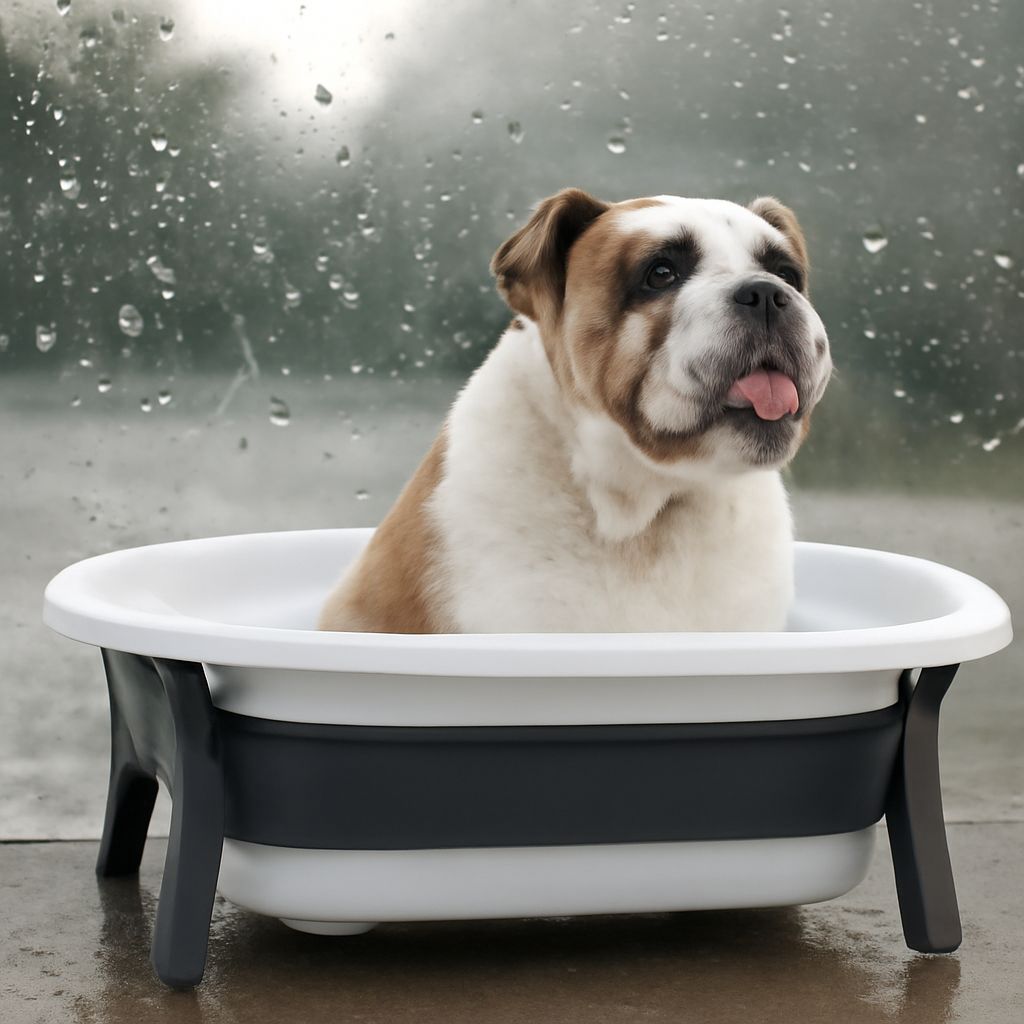
A portable dog bath is a practical solution for smaller dogs or owners with limited space. Collapsible fabric tubs drain through a hose attachment and fold flat for storage. Inflatable models also exist and work well outdoors. The key is a non-slip surface on the bottom to prevent the dog from sliding and panicking mid-bath. Most portable tubs hold up well for dogs under 40 pounds.
Pet Tub Accessories
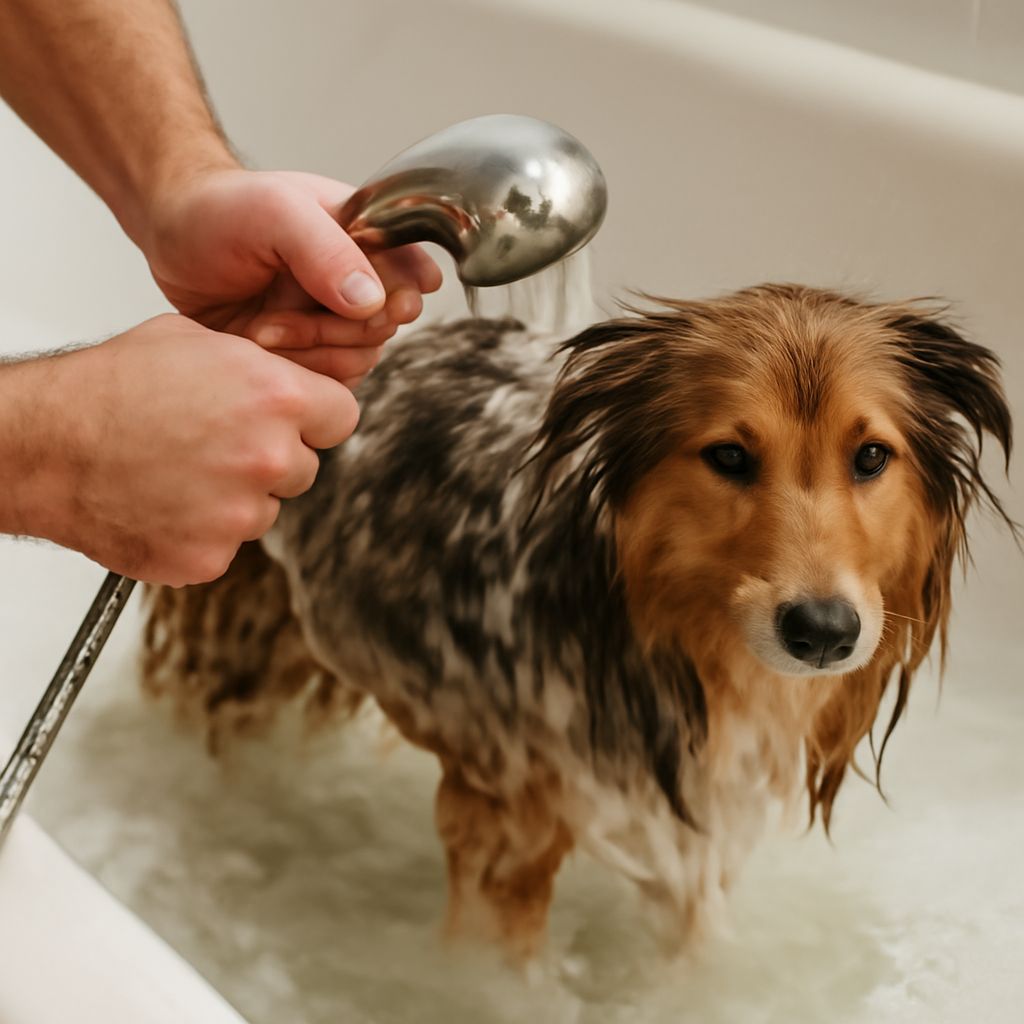
A handheld showerhead attachment connects to most standard faucets and gives you directional control over water flow. A rubber mat prevents slipping. A restraint loop or suction cup leash anchor keeps a squirmy dog in place. These accessories make any pet tub setup, fixed or portable, more effective.
Dog Bubble Bath: What to Use and What to Avoid
True dog bubble bath products designed for canine pH exist, but many marketed products are actually human formulas with dog branding. Read the ingredient list. Avoid sodium lauryl sulfate at high concentrations, artificial fragrances, and preservatives like methylisothiazolinone, all of which irritate sensitive skin. A dog-safe foaming shampoo achieves the bubble effect without the pH mismatch.
Frequency matters too. Most dogs only need bathing every four to six weeks unless they’ve gotten into something. Over-bathing strips natural oils and leads to a dull, dry coat. Short-coated breeds need bathing less often than double-coated or long-coated ones.
Dog in Hot Tub: Why It’s a Problem
Hot tubs reach temperatures between 100 and 104 degrees Fahrenheit. Dogs regulate body temperature less efficiently than humans and can overheat quickly in hot water. A dog in a hot tub for even a few minutes risks hyperthermia. Chlorine and bromine at hot tub concentrations also irritate canine eyes, ears, and skin. If your dog falls into a hot tub or you want to include them in outdoor activities near water, a pet tub filled with cool, clean water is the safe alternative.
Key takeaways: A proper dog tub, whether a fixed station or collapsible portable dog bath, makes bathing safer and more manageable. Use only products with a canine-appropriate pH, keep bubble bath options to dog-specific formulas, and keep dogs away from hot tubs where water temperature and chemical levels pose real health risks.