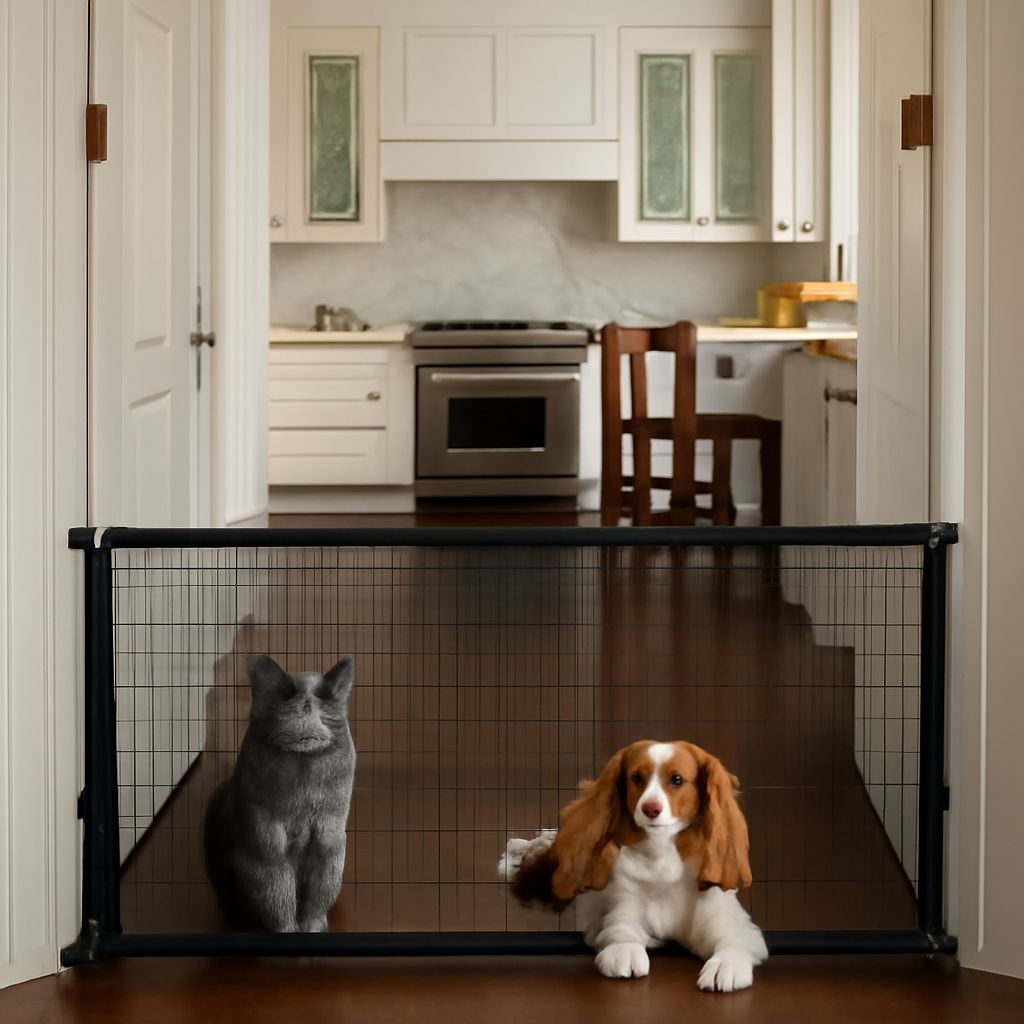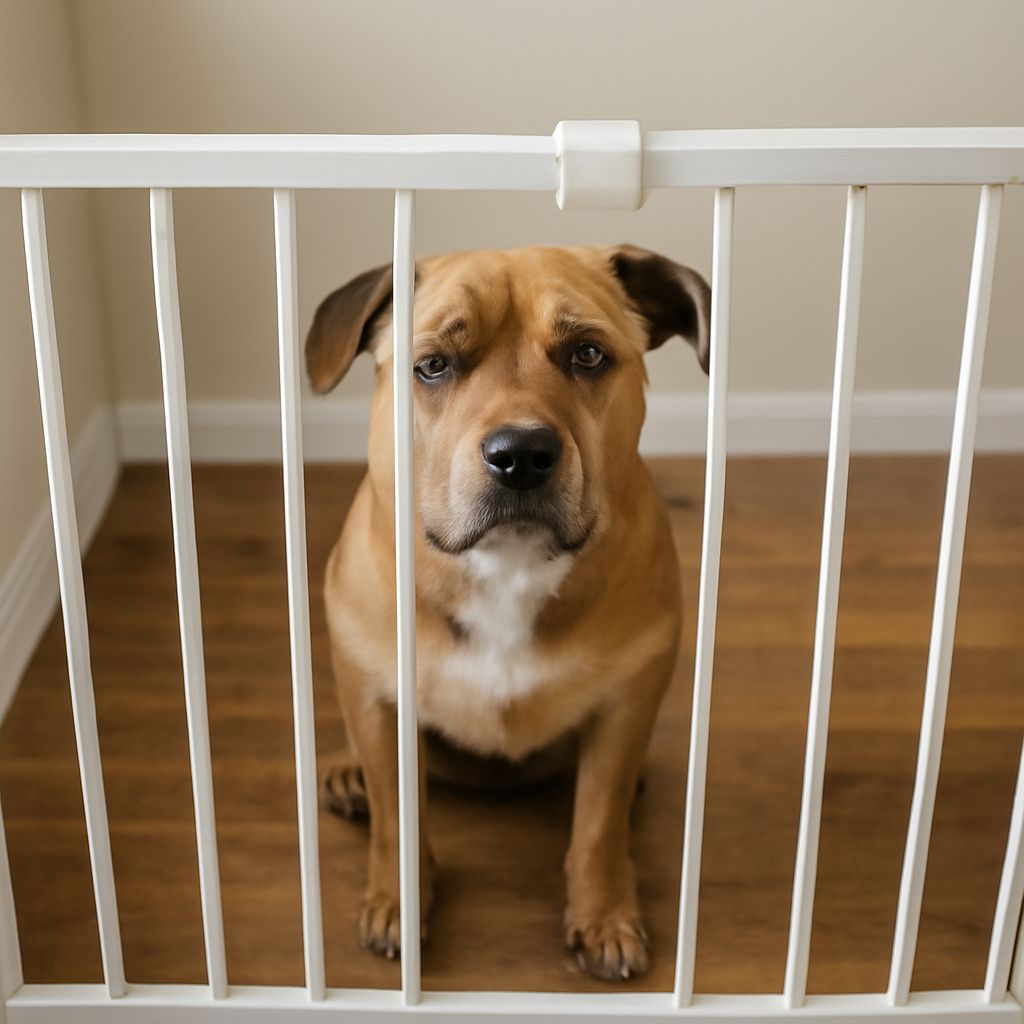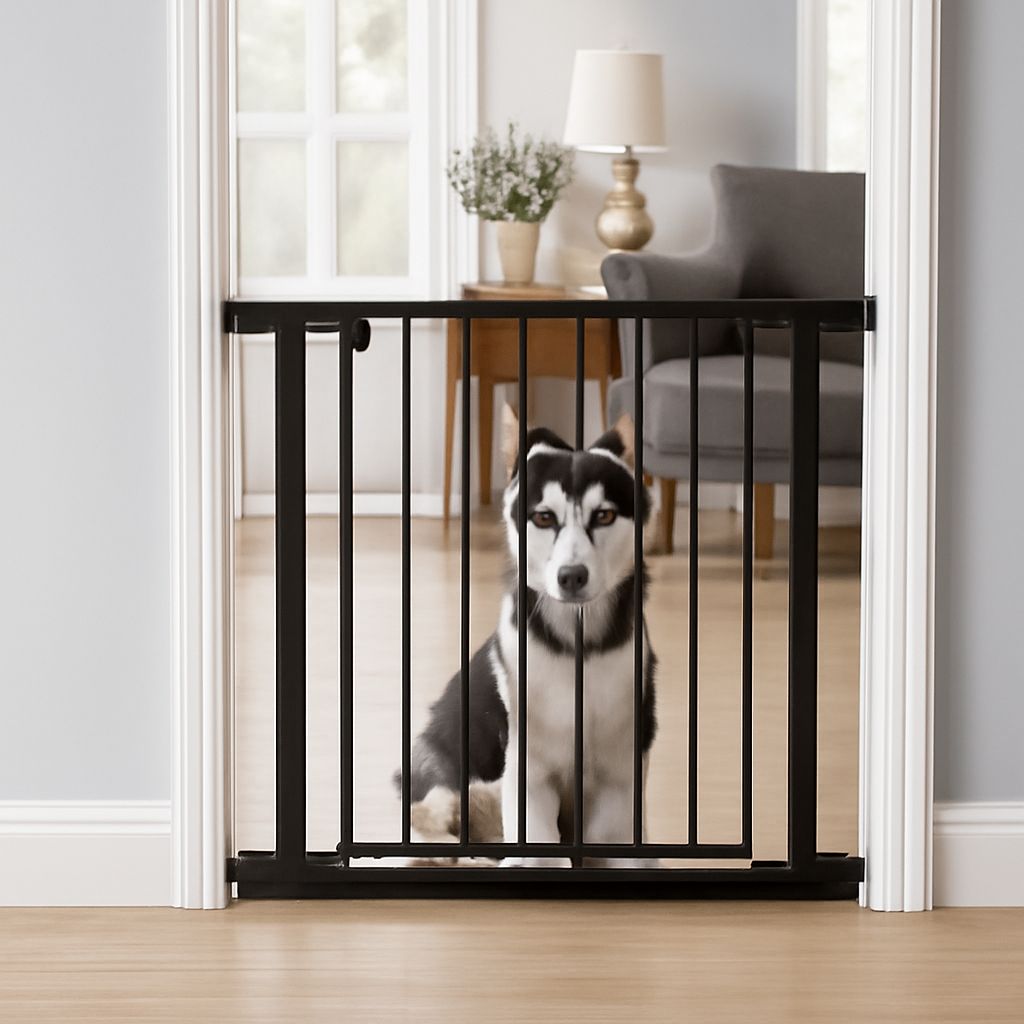
Many pet owners buy the first barrier they see without considering their dog’s size, jumping ability, or the specific area they need to contain. An indoor pet fence that works for a Chihuahua will fail completely with a Labrador. And the assumption that an outdoor pet fence is just a bigger version of an indoor barrier misses key structural differences: outdoor fencing must handle weather, digging, and greater forces than an indoor barrier ever will.
The right indoor pet barrier solves the problem you actually have — whether that’s keeping a dog out of the kitchen, off the stairs, or away from a baby’s room. An outdoor pet fence handles yard containment, garden protection, or designated run areas. Understanding how to build a dog fence — even a basic one — starts with knowing your dog’s behavior. An inside dog fence that a dog can push over or squeeze through is not a fence at all.
Types of Indoor Pet Fences and Barriers
Pressure-Mounted Baby Gates and Dog Gates
Pressure-mounted gates use tension against doorframes or walls — no hardware installation required. They suit doorways and hallways where the dog does not push heavily against the barrier. These gates are the fastest indoor pet barrier option to install and remove. Most hold dogs up to 30-40 pounds reliably. For larger or more determined dogs, choose a hardware-mounted gate, which bolts directly into wall studs and resists significantly more force.
Freestanding Pet Fences and Exercise Pens
Freestanding panel systems create flexible enclosures that can be reconfigured. They work well as an inside dog fence for sectioning off a large room or creating a play area. Panel height matters: most standard panels reach 24-28 inches, which is insufficient for dogs that jump. Tall panel sets reaching 36-48 inches are available for larger breeds. Freestanding systems tip over if a dog hits them hard, so placing them against furniture or walls improves stability.
Outdoor Pet Fence Options and Installation Basics
Traditional Wood and Chain-Link Fencing
When learning how to build a dog fence outdoors, wood privacy fencing and chain-link are the most common starting points. Wood provides visual privacy and discourages fence-running behavior in reactive dogs. Chain-link is more affordable and durable in extreme weather. Both require posts set in concrete, proper gate hardware, and height appropriate for the breed — a fence for a Siberian Husky or Belgian Malinois needs to be at least six feet tall.
Portable and Temporary Outdoor Pet Fences
Portable outdoor pet fence systems use metal stakes and mesh panels to create a temporary yard boundary. They suit renters, camping trips, and areas where permanent installation is not possible. These are not intended for unsupervised containment of powerful or motivated dogs — a determined dog can pull stakes from soft ground. Use them as a supplementary boundary rather than a primary outdoor pet fence for large or escape-prone breeds.
Choosing the Right Barrier for Your Setup
The best indoor pet fence is one your specific dog cannot defeat. Test the gate or panel with your dog before relying on it. Check height against the dog’s standing reach, width against any gap the dog could squeeze through, and stability against any force the dog applies. For dogs that jump, climb, or chew through barriers, consult a professional trainer before investing in additional fencing — the problem may be containment anxiety rather than inadequate fence height, and a trainer can help address the root behavior.