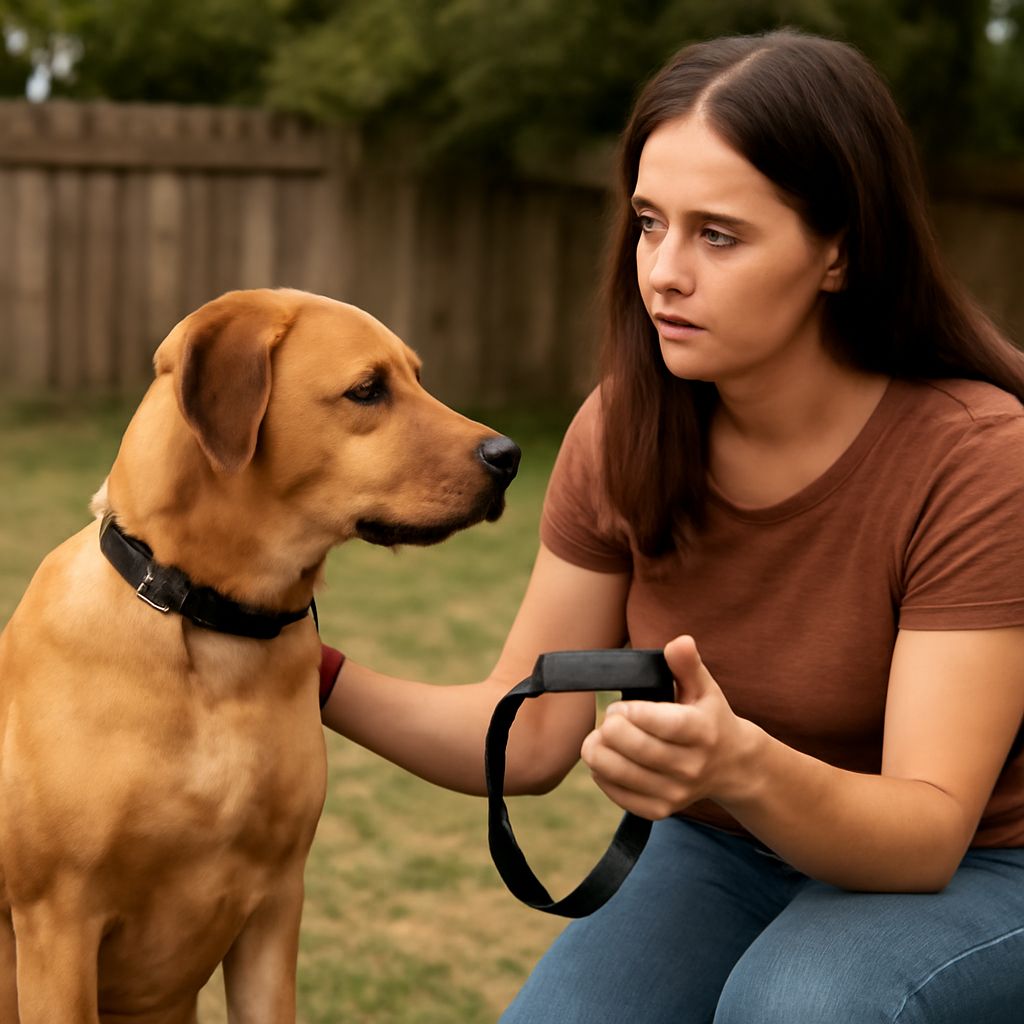
The dog chain has a polarizing reputation. Some trainers swear by slip chains for quick leash corrections, while others argue the design causes neck injuries when used without proper technique. The truth is that most collar-related injuries result from incorrect sizing, not the material itself. A dog chain collar fitted and used correctly provides clear tactile feedback without harming the dog. The problem is that most owners buy one without instruction and misuse it from day one.
A dog chain collar is not a substitute for obedience training, and a gold chain dog collar worn as decorative gear does nothing for leash manners. Chain dog collars sold at pet stores range from fine-link slip chains to martingale-style designs with limited tightening. A dog collar chain worn daily without supervision can snag on crate bars or fence wire, creating a strangulation risk. Use any chain-based collar only during supervised walks.
Types of Chain Collars and What They Are Designed For
Slip Chains A slip chain, often called a choke chain, tightens when the leash is pulled and releases when tension drops. This design was historically the standard in military and sport dog training. The collar must be sized to allow only two fingers of slack when fully tightened around the dog’s neck. An oversized slip chain drags and jingles without giving any feedback. A too-small one stays tight continuously and defeats the purpose.
Slip chains work only when the handler understands timing. The correction is a short snap followed by immediate release, not sustained pulling. Dogs whose owners haul back on a taut slip chain for minutes at a time learn nothing except that walks hurt. For owners who want the look of chain gear without the correction function, many retailers sell fixed-ring chain collars that do not tighten at all.
Martingale Chain Collars
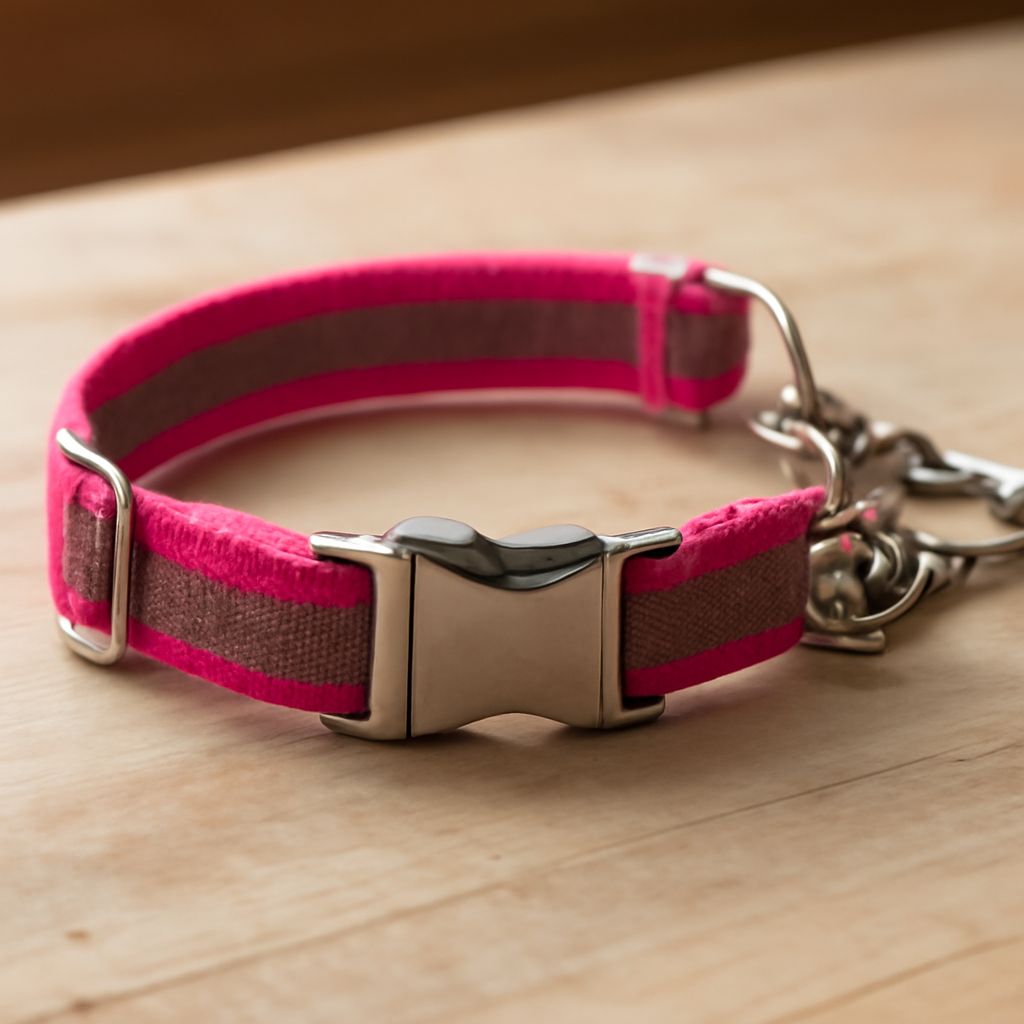
Martingale designs combine a fabric loop with a chain loop that tightens to a fixed stop point. The chain section provides an audible click when the collar snugs, giving the dog a sound cue alongside the physical one. These are popular with sighthound owners because the collar cannot slip over a narrow skull. Greyhounds, whippets, and Salukis escape flat collars with ease, making martingales a practical safety choice.
Decorative Chain Collars: Style Versus Function
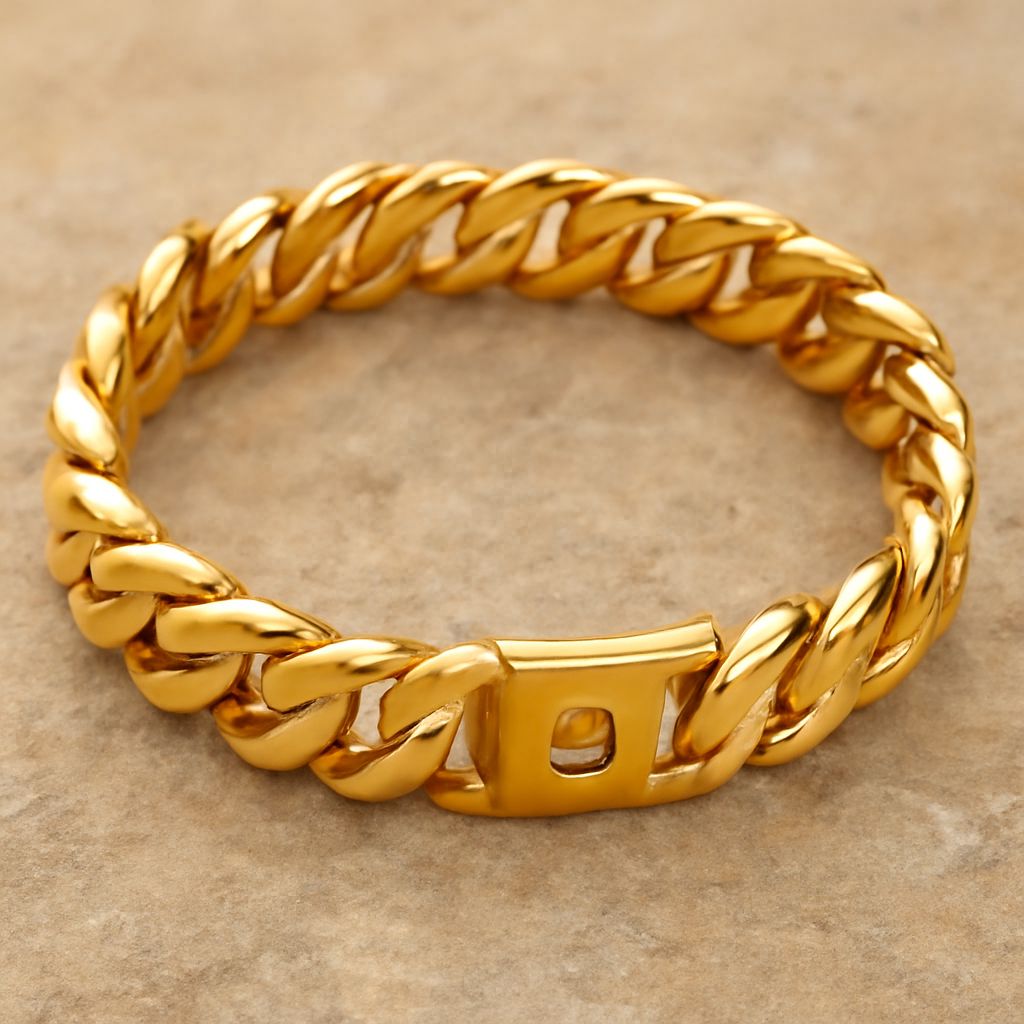
Gold-toned dog collar chains are sold primarily as accessories, not training tools. These collars use plated metal links over a fabric or leather base and are not designed to bear the stress of leash corrections. They photograph well and serve a purpose for dog shows or photoshoots where the owner wants a polished look. Daily wear on active dogs scratches the plating quickly and may irritate the skin if moisture collects under the links.
Owners who want a decorative chain look for outdoor use should look for stainless steel or solid brass options rather than plated finishes. Stainless resists corrosion and holds up through rain and swimming. Sizing follows the same two-finger rule as functional chain collar gear.
Safety Practices for Chain Collar Use
Remove any chain-style collar before crating your dog. The links can catch on wire crate bars, and a dog that panics while snagged can break its own neck. A flat buckle collar with ID tags is safer for unattended wear. When walking with a chain collar on a pulling dog, consult a certified professional trainer rather than relying on hardware alone. Leash equipment changes behavior only when paired with consistent handling technique.