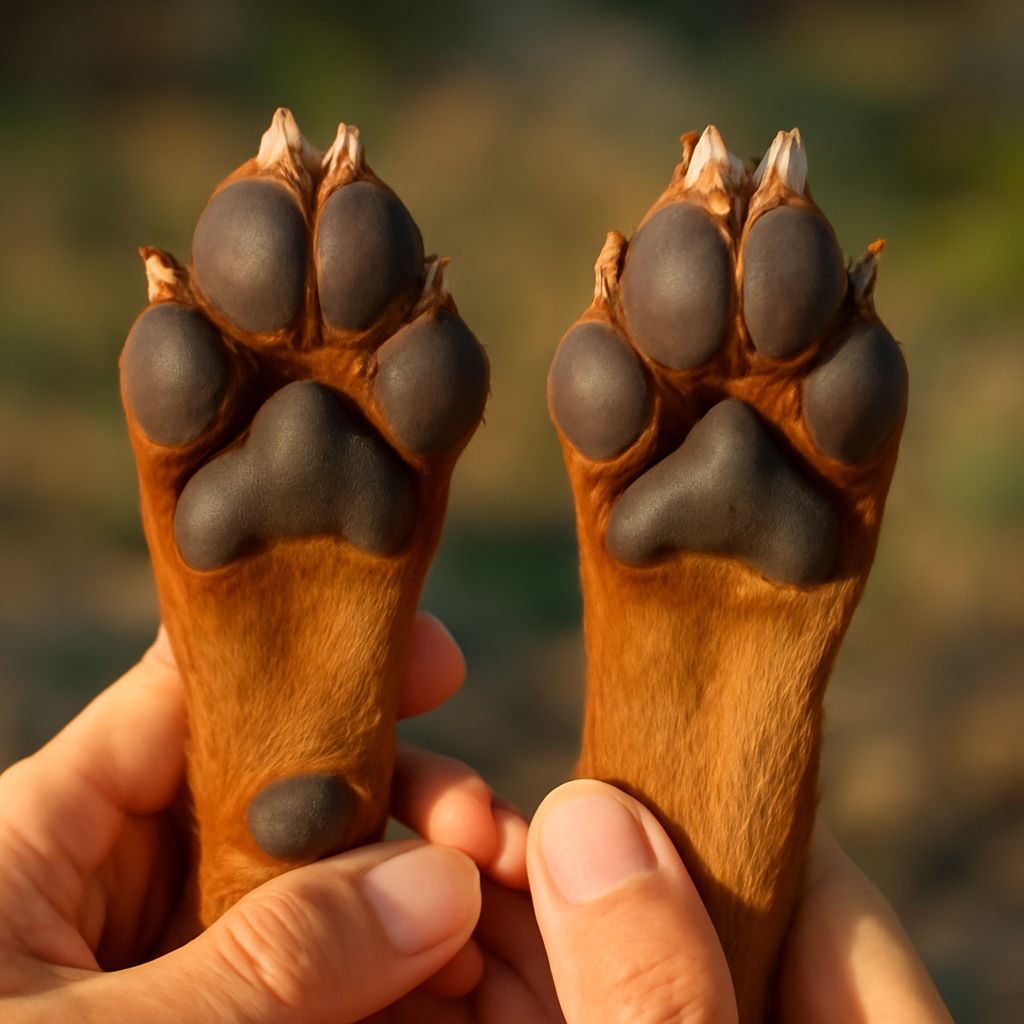
Most owners know about the four main paw pads but overlook the dog carpal pad, the single pad located higher on the front leg at the wrist joint. This structure absorbs impact when a dog lands from a jump, providing a braking function that protects joints. A dog dislocated shoulder often sends people searching for leg anatomy, and the carpal pad sits in the same anatomical neighborhood, making it worth understanding together. Some owners stumble on information about the least weasel pet while researching small animal anatomy, a reminder that many species share convergent limb structures. Choosing spanish girl dog names for a new dog is fun, but understanding what you’re naming matters too, including the body parts vets will ask about. A dog rib cage protruding beyond normal contour is a separate concern from leg anatomy, but both deserve the same careful observation habit.
This article breaks down what the carpal pad does, how to recognize damage to it, and how these observations connect to broader musculoskeletal awareness in your dog.
What the Carpal Pad Does and How It Gets Injured
Function of the Carpal Pad
The carpal pad is a keratinized skin structure covering the accessory carpal bone on the back of the foreleg. Unlike the main weight-bearing pads, it contacts the ground primarily when a dog decelerates sharply, stops from a run, or lands after a jump. Agility dogs and dogs that run on hard surfaces use this pad more heavily than sedentary pets. The pad’s thick keratin layer protects the underlying bone from abrasion.
Common Injuries Lacerations to the carpal pad bleed heavily because the area has a rich blood supply. A cut pad on the wrist area requires cleaning, pressure to stop bleeding, and often veterinary closure with sutures or tissue adhesive. Leaving it untreated risks infection and poor healing that creates a thickened, painful scar. Hyperkeratosis, where the pad surface becomes excessively thickened and cracked, occurs in some breeds and can be managed with veterinary-approved moisturizers. Severe cracking indicates a dermatological consult.
Shoulder Dislocations and Related Leg Concerns
A dislocated shoulder in dogs, technically a glenohumeral luxation, is not common but does occur after trauma or in dogs with congenital joint laxity. The dog holds the affected forelimb off the ground or moves it with a shortened, painful stride. The shoulder joint appears visually asymmetric in some cases. This requires same-day veterinary attention. Attempting to manipulate the limb at home causes additional soft tissue damage and severe pain. A vet will confirm the dislocation with radiographs and reduce it under sedation or general anesthesia.
Owners observing any foreleg abnormality should check multiple areas systematically: pads including the carpal pad, the pastern, the elbow, and the shoulder. Note whether the dog bears weight, where it flinches on palpation, and whether swelling is present.
Monitoring Body Condition: Ribs and Overall Frame
A protruding rib cage in a dog can mean one of two things. In a lean, athletic dog with low body fat, visible ribs are normal and do not indicate illness. In a dog that was previously well-covered, sudden rib visibility suggests weight loss that warrants investigation. Possible causes include intestinal parasites, malabsorption disorders, cancer, or inadequate caloric intake. Run your hands along the ribcage. You should feel ribs easily but not see each one sharply defined at rest. If you can see individual ribs without pressing, schedule a veterinary appointment for a body condition assessment and bloodwork.
Bottom line: The carpal pad is a functional structure that protects the wrist joint on impact, and injuries to it need prompt cleaning and often professional closure. Shoulder dislocations are emergencies requiring immediate veterinary care. Monitoring your dog’s body condition, including rib visibility and pad integrity, gives you an early warning system for health changes that are far easier to treat when caught early.