What does an American Staffy need to thrive at home? Plan on daily activity, reward-based training, companionship, and routine health care. A Staffordshire Terrier from America may be strong and athletic, but its particular energy level and social preferences are best learned by getting to know the individual dog.
American Staffordshire Terriers: Breed and Size
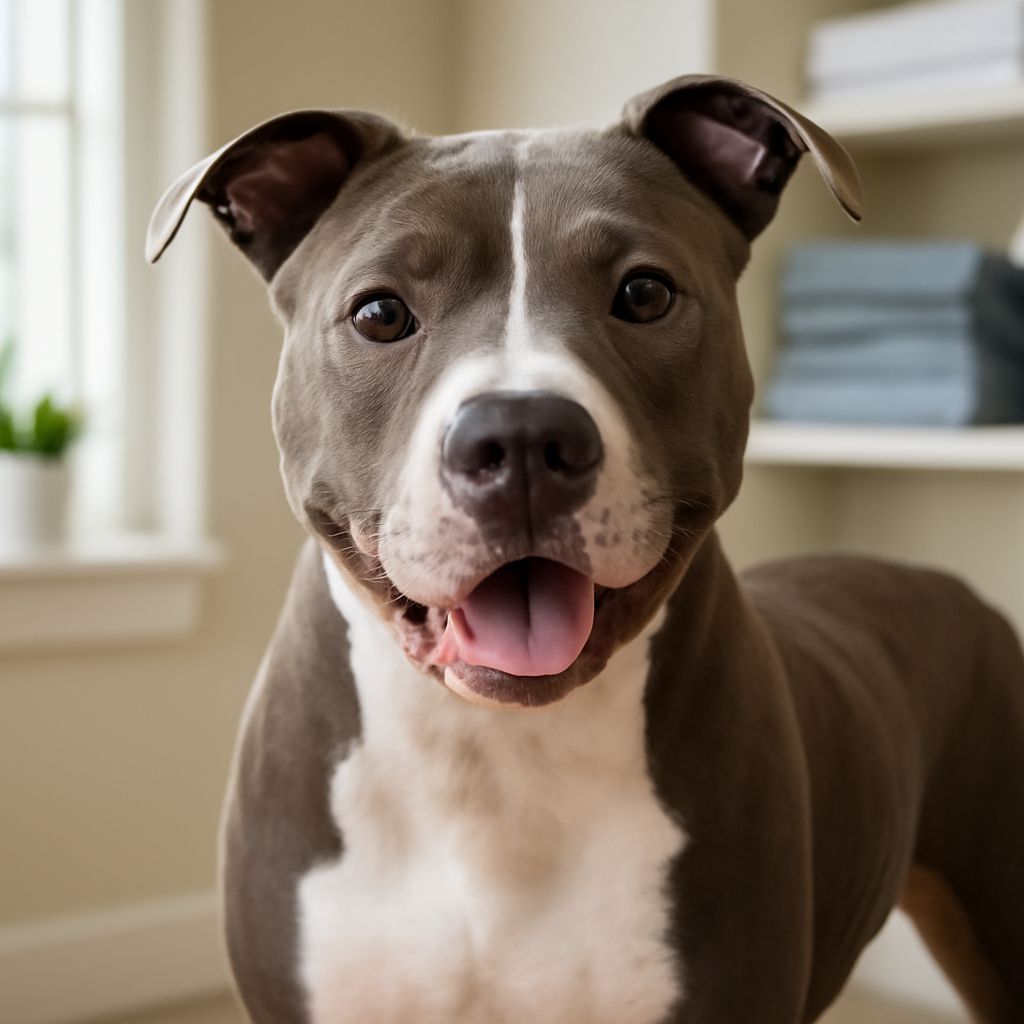
The American Staffordshire terriers recognized by the American Kennel Club are a distinct breed, often called AmStaffs. The AKC’s weight chart lists 40–70 pounds for adults. Individuals can fall outside that range, so use the dog’s actual build and your veterinarian’s assessment when choosing food and equipment. A sturdy, adjustable harness and leash should fit comfortably without rubbing or allowing an escape.
“Pit bull” is a broader label used for several breeds and dogs of similar appearance; it does not establish that a dog belongs to this breed. Shelter descriptions can reflect an estimate rather than documented ancestry. In a University of Florida study, shelter staff and veterinarians sometimes disagreed when identifying pit bull-type dogs by appearance. Ask what is known from records and what is an estimate.
A breed label also cannot tell you how an individual will respond to a visitor or another dog. Ask the people who know the dog about specific situations, and watch its behavior over time. A relaxed body, willingness to engage, or preference for distance gives you more useful information for a particular introduction than a stereotype does.
Make a routine for a capable companion
An am staff terrier may enjoy a brisk walk, a game of tug with rules, scent games, or practicing new skills. Offer regular physical activity and mental enrichment, adjusting the amount to the dog’s age, fitness, and health. A sniffing walk can be as engaging as a game in the yard; let the nose do some of the work.
A powerful adult can pull hard even when simply eager to reach a favorite tree. Practice loose-leash walking in a quiet area first: reward the dog for walking near you, pause when the leash tightens, and resume when it relaxes. Gradually add distractions. A well-fitted harness and a leash you can hold securely make practice more manageable; they do not replace training.
Puppies need short, age-appropriate activities and plenty of sleep. Ask your veterinarian about exercise while the dog is growing, and avoid forced distance running or repetitive high jumps. For any age, stop if your dog limps, struggles to breathe, or seems unusually tired, and seek veterinary advice about a change from its normal activity.
Teach skills that make daily life easier
Start with coming when called, settling on a mat, waiting at doors, and trading an object for a treat. The American Veterinary Society of Animal Behavior recommends reward-based training. Use food, praise, or play that your dog values, and keep sessions short enough that both of you can finish on a good note.
For an AmStaff, practice calm greetings before inviting a guest to pet the dog. Reward four paws on the floor and allow the dog to move away. If it becomes overexcited, increase distance and try again after a break. Teach children to avoid hugging, climbing on, or disturbing a resting dog, and supervise every interaction.
Introduce dogs one at a time in an appropriate setting, respecting each animal’s signals and the handler’s advice. Some dogs enjoy canine company; others prefer space or a small circle of familiar friends. Do not force interaction. If you notice repeated fear, stiffening, growling, or a sudden behavior change, consult your veterinarian and a qualified reward-based behavior professional.
Short coat, regular checks
The coat of an american stafordshire terrier is short, but it still benefits from regular brushing. A soft brush can remove loose hair while you check for redness, bumps, or irritated areas. Bathe as needed with a dog-appropriate product and dry the skin folds and coat thoroughly. Ask your veterinarian about persistent itching, ear odor, sores, or hair loss rather than trying a series of home treatments.
Keep nails at a comfortable length, check ears, and introduce toothbrushing gradually with dog-safe toothpaste. A few seconds of cooperative handling followed by a reward is a useful beginning. Check paws after walks for cuts or debris, particularly after rough ground or hot pavement.
An American Staffy’s short coat also offers limited insulation in cold conditions. Watch for shivering or reluctance to continue, and provide a suitable coat if needed. In hot weather, choose cooler hours, offer water, and let the dog rest in shade or indoors. Exercise tolerance belongs to the individual and can change with weather or health.
Food and health care through adulthood
Feed a complete diet suited to the dog’s life stage, measure portions, and count training treats in the daily total. Ask your veterinarian to assess body condition rather than aiming for a number on a breed chart. Regular weight checks make it easier to adjust food or activity before a small change becomes a larger problem.
The Staffordshire Terrier Club of America provides information about breed health testing, including a DNA test for a form of cerebellar ataxia. The AKC also discusses hip dysplasia, cardiac disease, and skin allergies in its breed guidance. If acquiring a puppy with known parents, request their screening results and discuss them with your veterinarian. For an adopted dog, share the available medical history and ask which preventive care is due.
As your dog matures, its preferred activities, stamina, and health needs may change. Keep observing the individual, adapt walks and training to its comfort, and schedule regular veterinary visits. The lively puppy who once chased every rolling leaf may grow into a dog with a very definite opinion about the best sunny resting spot.