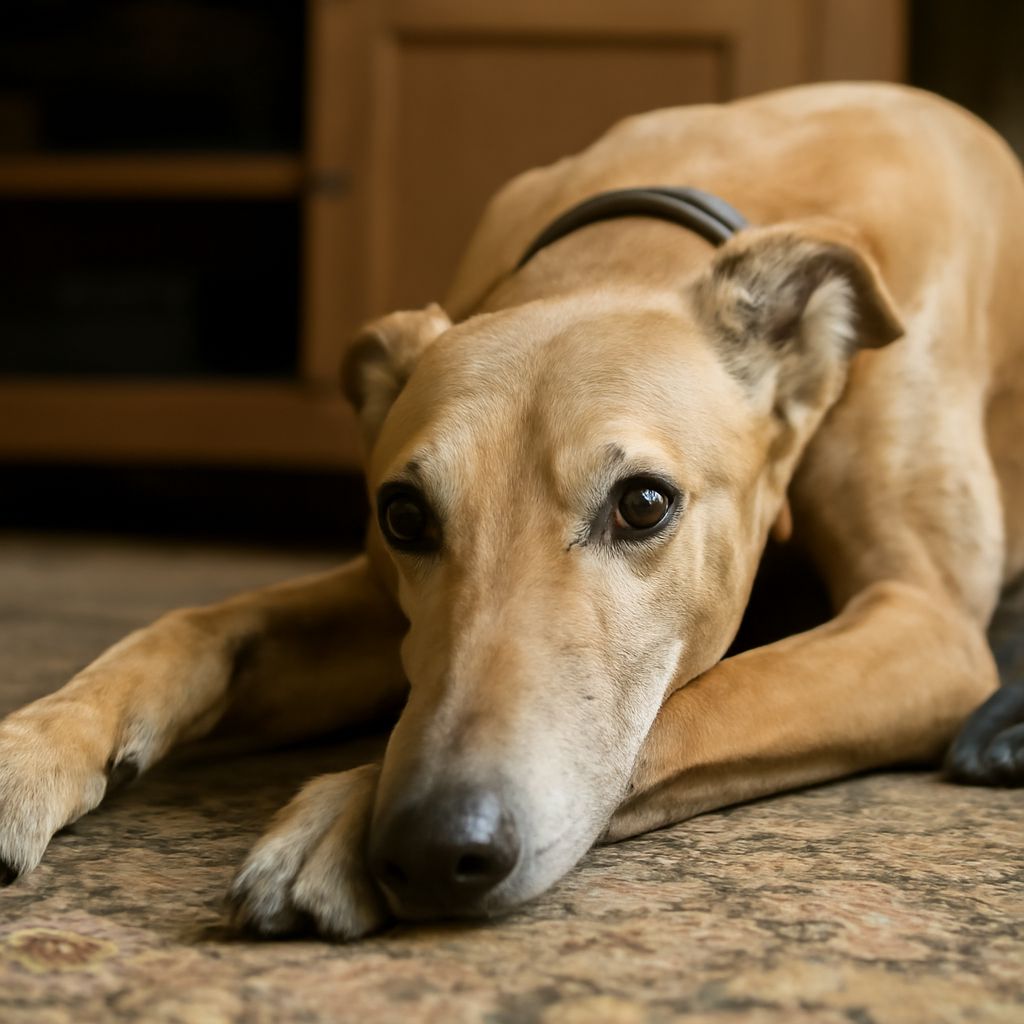
Can a Greyhound fit into a quiet home if you are not a runner? Often, yes: this breed of Greyhound needs regular walks, safe opportunities to move, and a comfortable place to rest. A dog with Greyhound heritage may enjoy a good sprint and then spend a satisfying afternoon stretched out on a soft bed. The individual dog’s history, health, and energy level will determine the details.
Before choosing one, consider the practical side of those long legs: secure walking equipment, a safe enclosed area for off-leash exercise, and a household willing to make introductions and new routines at the dog’s pace.
Greyhound Dog Breed: Size and Temperament
The greyhound dog breed combines a deep chest, long legs, and a lean frame. The American Kennel Club lists typical adult males at 28–30 inches at the shoulder and 65–70 pounds; females are typically 27–28 inches and 60–65 pounds. Individuals vary. Measure your car space and consider whether your home has room for a bed long enough for a full-body stretch.
Among greyhound dog breeds, the Greyhound and the Italian Greyhound are distinct breeds with very different sizes. Make sure an adoption listing describes the dog you intend to meet rather than assuming a shared name means the same adult size or care needs.
The greyhound breed is often described as gentle and independent. Some dogs are sociable with visitors; others prefer a quieter introduction. Ask the caregiver what the particular dog enjoys, how it responds to being handled, and whether it settles comfortably when people leave. A foster family may be able to describe ordinary household behavior as well as reactions on walks.
Daily Movement Without a Marathon
Greyhound characteristics include the ability to accelerate quickly and an instinct to pursue moving things by sight. A walk can be peaceful until a squirrel darts across the path. Use a well-fitted harness or a properly fitted martingale collar recommended by the adoption group, and check the fit before each outing. Hold the leash securely and choose quieter routes while you learn what catches your dog’s attention.
Plan regular walks and chances to sniff, explore, and practice simple cues. For safe off-leash running, choose a securely fenced area with gates closed and checked in advance. The Southeastern Greyhound Club advises allowing these dogs off leash only in securely fenced areas because they may chase perceived prey. A dog who comes promptly in the living room may respond differently when wildlife appears.
Build activity around fitness and health. A newly adopted dog may need gradual conditioning; a puppy or older dog needs a plan suited to its stage of life. Ask your veterinarian about exercise after an injury or if you notice limping, reluctance to move, or unusual fatigue. In hot weather, walk during cooler hours and offer water and shade. On cold or wet days, a well-fitting coat may make outings more comfortable.
Set Up a Comfortable Home
A thick, washable bed gives a lean dog somewhere soft to rest. Place it in a quiet spot where the dog can choose to join the household or withdraw. Allow a sleeping dog to wake on its own, and teach children to leave the bed as a private resting place. If you need the dog to move, call it over rather than reaching into its sleeping space.
Some Greyhound dogs are unfamiliar with stairs, sliding doors, polished floors, or the sounds of an ordinary kitchen. Add nonslip runners, keep glass doors visible, and introduce stairs slowly with treats and support. Do not pull a hesitant dog up or down. Ask the adoption organization or a reward-based trainer for help if the dog remains fearful.
Arrange a safe area for times when you cannot supervise. Start alone-time practice with very short absences and return before the dog becomes distressed, gradually increasing the interval. A midday visitor or walker can help cover longer workdays. Pacing, persistent vocalizing, or frantic attempts to escape are reasons to ask your veterinarian or a qualified behavior professional for guidance.
Children, Cats, and Other Dogs
A Greyhound’s breed traits cannot tell you whether a specific hound will be comfortable around your cat. Ask the rescue what it has observed and how introductions have been assessed. Start with secure separation, use barriers and a leash as directed by an experienced professional, and give the smaller animal an escape route. Never leave them together unattended until a qualified professional and your own careful observations support the arrangement; some dogs will need permanent separation.
With children, supervise closely and teach gentle handling. Offer the dog a way to leave the interaction, and interrupt if either seems uncomfortable. Introduce other dogs in a controlled setting, with enough space for both to move away. Ask about previous injuries, sensitivities, and play preferences rather than assuming every fast dog enjoys rough play.
Grooming, Health, and Training
Greyhound dogs have short coats that are straightforward to maintain. A weekly pass with a soft brush or grooming mitt removes loose hair and gives you a chance to notice scrapes or changes in the skin. Bathe when needed with dog-formulated shampoo. Check ears and paws regularly, keep nails trimmed, and brush teeth with dog toothpaste as your veterinarian recommends.
Book an initial veterinary visit and share any records from the breeder or rescue. Discuss diet, body condition, parasite prevention, dental care, and any previous injuries. Greyhounds are naturally lean, so ask the vet to show you how to assess your own dog’s condition rather than feeding solely by appearance. Tell veterinary staff the dog’s breed and medical history when procedures are planned.
Keep training short and pleasant. Reward a name response, recall, and relaxed leash walking with food or another reward your dog values. Practice first in a quiet room, then add distractions gradually. For this breed of dog, a Greyhound’s interest in movement can be a powerful distraction, so use a leash or secure fence while skills develop.
Choose a Greyhound only if your ordinary week can consistently provide the exercise, secure handling, companionship, and rest that the individual dog needs.