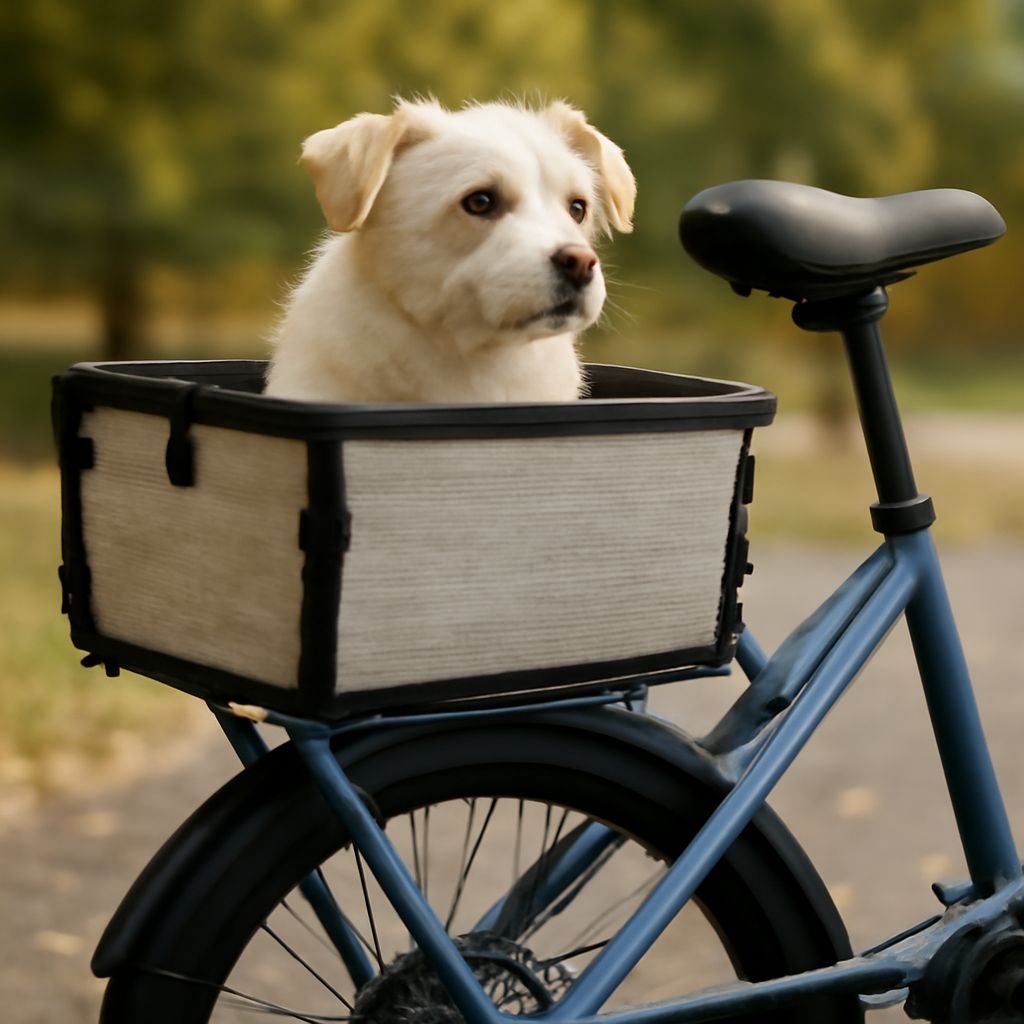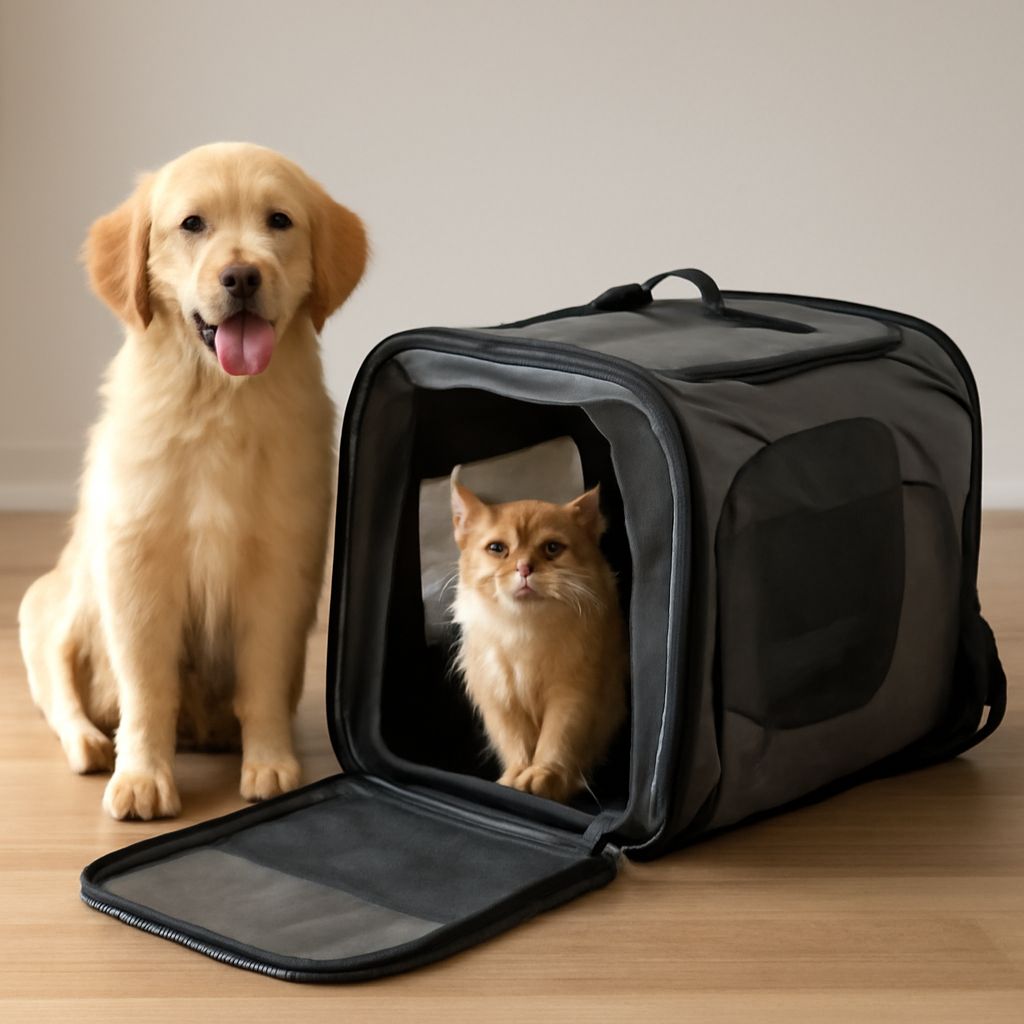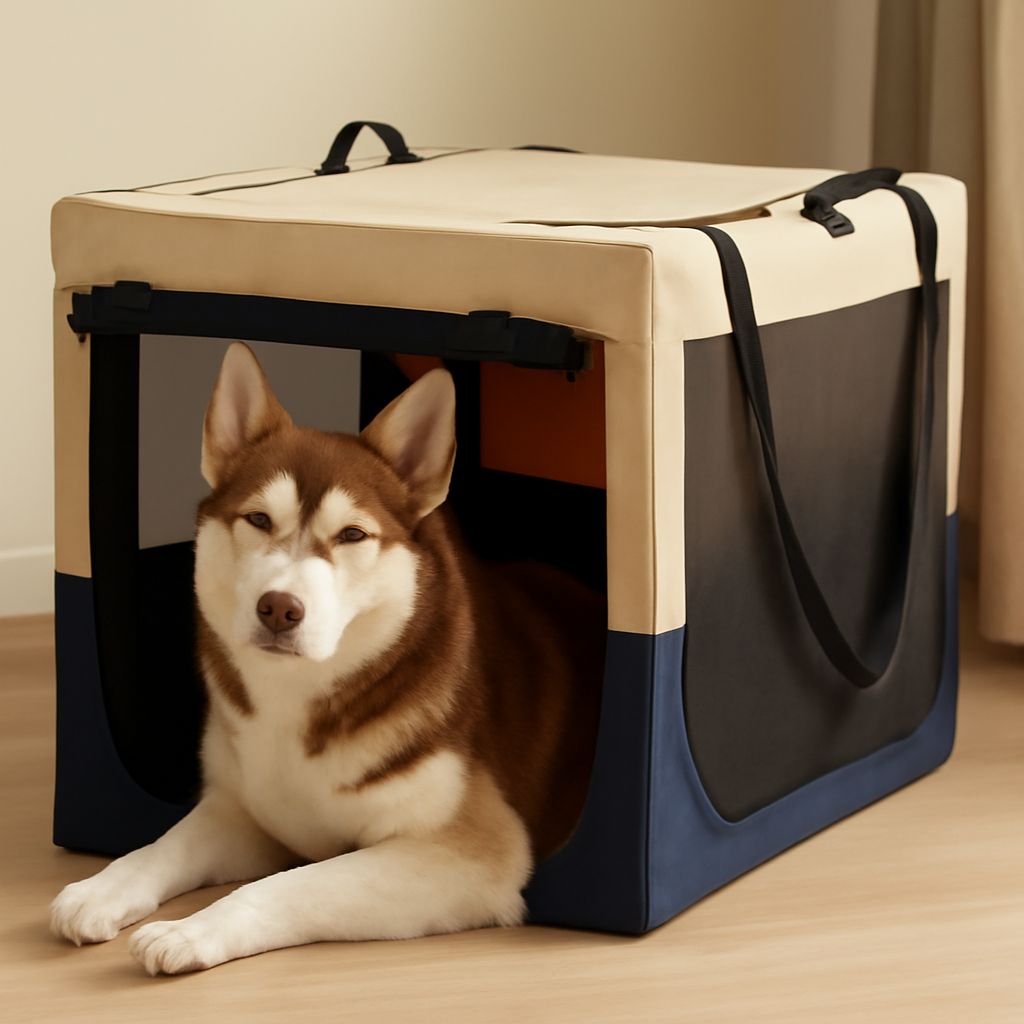
Measure your dog and the available space in your vehicle before choosing your dog’s travel crate. Your dog needs room to change position comfortably, while the crate needs a location where it can be secured according to its instructions. Look closely at crash-tested crates for dogs: the test details and the way you install the crate matter as much as the label on the box.
A good fit also makes practice easier. A dog who can settle comfortably and enter willingly is a much better travel companion than one who spends the trip trying to negotiate an early release.
Start with your dog’s measurements
Measure your dog from nose to the base of the tail and from the floor to the top of the head or ears while standing naturally. Compare those measurements with the manufacturer’s interior dimensions and sizing guidance; exterior dimensions include the shell and may be noticeably larger. Check the weight limit too, especially if your dog is still growing.
Your dog should be able to stand without crouching, turn around, and lie down in a natural position. Watch those movements in the actual enclosure if possible. A broad-shouldered dog may need more turning room than another dog of the same weight, and a tall dog may need more headroom. The Humane Society’s crate guidance describes room to stand and turn as a basic fit requirement.
At the same time, a huge interior gives a dog more room to be thrown around during a sudden stop. Aim for the space needed for comfortable movement, then follow the tested product’s sizing recommendations. If your dog falls between sizes, ask the manufacturer how its guidance applies to your measurements and the intended vehicle installation.
Crash tested dog crates: What the evidence tells you
“Tested” tells you an event took place; the report tells you what happened. When comparing crash tested dog crates, look for the exact model and size, the test organization, the protocol, the weight of the test dog, and the result. A video can show whether the door remained shut, the shell stayed intact, and the connections held, but read the accompanying description to understand the setup.
For example, the Center for Pet Safety’s 2015 study records the products, test-dog weights, connection methods, and observed outcomes. It used a simulated cargo area on a test sled. Those details let you compare your planned setup with the one examined; they do not describe every possible collision or vehicle. A result for one size or a particular strap kit should not automatically be assigned to a different size or attachment.
Compare independently crash-tested dog kennels with the installation equipment you can actually use. Reports on dog crates tested in crashes should describe their restraint system as well as the enclosure. Check whether a claim means a product was tested, passed a named protocol, or earned a current certification under that program. Those are different statements. If the seller cannot identify the test and result, ask for the report before treating the claim as a deciding feature. Strong-looking plastic, metal, or wire alone cannot tell you how a complete setup performed in a collision.
Make the vehicle and restraint work together
Before buying a travel dog crate, measure the opening through which it must pass, then the usable floor length, width, and height where it will sit. Include the slope of the hatch, wheel wells, seatbacks, and any door that must swing open. A cardboard template can reveal an awkward corner before you wrestle a heavy purchase into the car.
In an SUV, try the proposed position with the hatch closed and the seats in their normal travel position. Some SUV dog crates have sloped sides to suit a hatch, but dimensions and door clearance still vary. Make sure ventilation openings remain clear, your dog can enter and exit without twisting into a tight gap, and you can reach the latch from outside. Consider how you would access the door after a minor collision or if the hatch could not open.
A rear cargo area can offer space, but the crate must be installed as its maker specifies. Identify the vehicle’s approved attachment points and confirm their strength with the vehicle manufacturer. The Center for Pet Safety advises using strength-rated anchor straps and checking cargo-anchor strength; the load involves both the dog and the crate. Attach straps to the designated crate points, route them as directed, and remove slack. A luggage hook or a strap wrapped around an arbitrary seat component may not be suitable for that load.
If a model calls for a seat belt instead, follow its instructions for the permitted seat position and belt path. Keep the carrier clear of airbags, and never put the dog on the driver’s lap. The American Veterinary Medical Association recommends safely restraining dogs on car trips. Do not improvise a different orientation or restraint because it seems snug: if the specified setup will not fit your vehicle, choose another compatible arrangement.
Build comfort before the long drive
Introduce dog travel crates at home with the door open. Toss a treat inside and let your dog investigate and leave. Serve a meal near the entrance, then farther inside as confidence grows. Once your dog is relaxed, briefly close the door while you stay nearby, reward calm behavior, and open it again. Increase the time gradually; if your dog becomes distressed, return to an easier step.
Next, install your dog’s crate for travel in the parked car and practice short sessions before trying a brief, pleasant drive. A familiar, thin piece of bedding can make the surface more comfortable, provided it does not obstruct airflow or create a chewing hazard for your dog. Secure loose luggage separately so it cannot slide against the crate. Watch for drooling, vomiting, or persistent distress, and discuss possible motion sickness or anxiety with your veterinarian.
On longer trips, plan regular stops for water, a leash walk, and a bathroom break. The AVMA suggests stopping about every two hours. Keep the vehicle ventilated and never leave your dog unattended in it. Even the safest dog crate for car travel needs a comfortable passenger and an attentive driver.
Before you pull away
Ask your dog to step inside and check that they can stand, turn, and lie down. Close and test the latch, check that vents are clear, and tug each correctly routed strap to confirm it is fastened and snug. Make sure the crate is stable, the door remains accessible, and your leash and water are ready for the first stop.