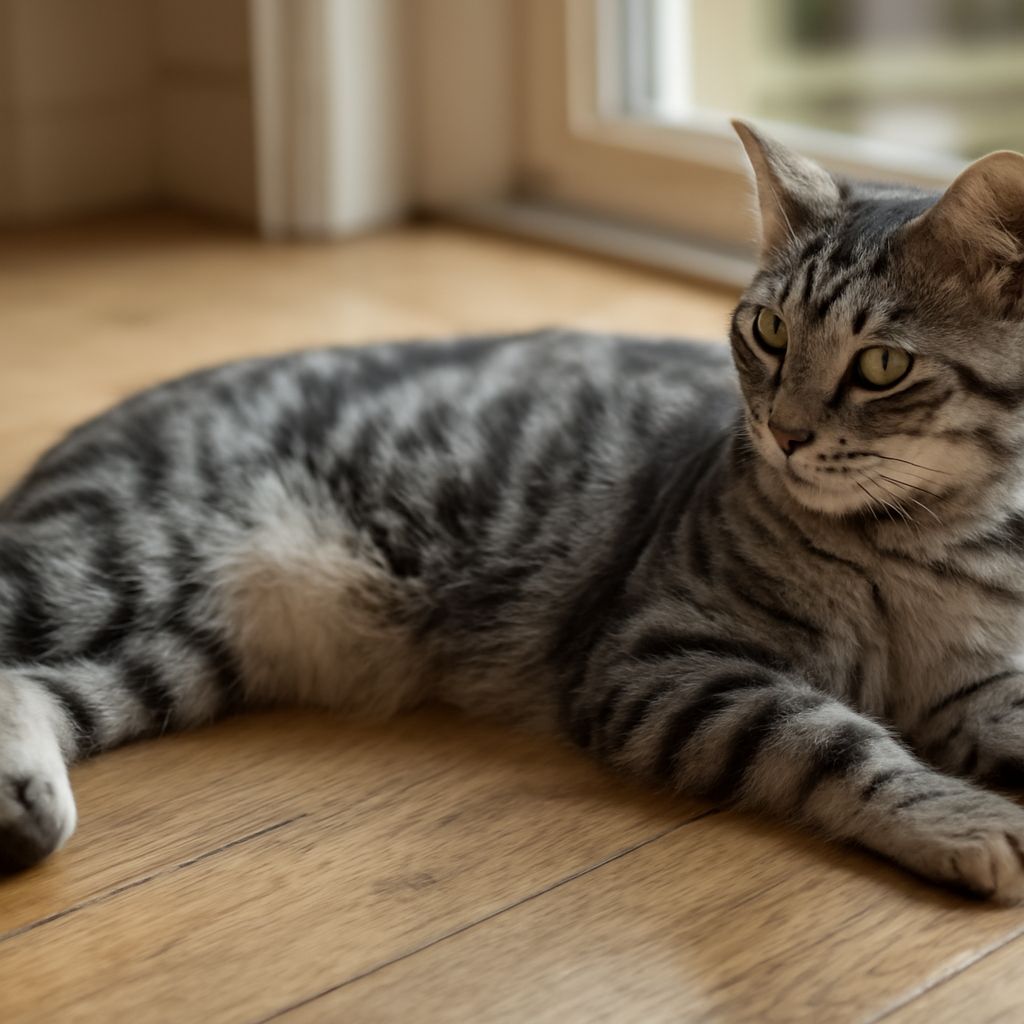
You’re filling out a shelter form for a cat with a speckled coat and a ringed tail. Is your tabby ticked, or are those spots? A few minutes looking at the whole coat can give you a clearer description than “brown cat with interesting markings.”
Imagine another tabby with spots scattered across her sides. Both cats may have an M-shaped mark on the forehead, yet their body markings tell different stories. Here’s how to read them and choose grooming habits that suit the coat underneath the label.
Start with the shape, then name the color
“Tabby” describes a family of coat patterns, not a breed. The pattern is the arrangement of markings: narrow stripes, spots, broad swirls, or a fine, evenly flecked appearance. Color describes the shades you see in those markings and the background around them. The Cat Fanciers’ Association’s coat guide describes four main tabby patterns and several color combinations.
For a useful description, look at the cat in natural light while she is standing or walking. Start with her sides and back, where the main pattern is easiest to compare. Then look at her face, legs, and tail for extra details. A photograph from each side can help when a cat is more interested in inspecting your phone than posing for it.
A brown cat with narrow dark stripes might be described as a brown mackerel tabby. A silver cat with broad dark swirls could be a silver classic tabby. White paws or a white chest can be added to either description. These are descriptions of appearance; a shelter or breed registry may use its own more specific terminology.
Narrow stripes: the mackerel look
On a mackerel-patterned cat, slender lines run down the sides from the back, rather like the bones of a fish. Look for parallel stripes over the body, along with bands on the legs and rings on the tail. Some lines may be less clear than others, particularly through a long coat or when the cat is moving.
If the stripes look interrupted, step back and look at their overall arrangement. Do you still see long, narrow lines with occasional gaps? Or do separate marks dominate the sides? That distinction helps you describe what you can see without having to settle every small ambiguity.
Spotted Tabby markings: a coat of dots
A spotted tabby has distinct spots across the body. They can be round, oval, small, or larger, and their arrangement can vary. The tail and legs may still have stripes or rings, so look at the torso before making your call. The CFA’s pattern descriptions show why a broken stripe can sometimes resemble a row of spots.
When describing a tabby with spotted sides, add the background color and mention any white areas: “silver with dark spots and white feet,” for example. A side-view picture of the spotted coat on a tabby makes those details easier for a shelter or pet sitter to recognize.
Broad swirls: classic and marble
The classic tabby pattern has wide, curving markings rather than thin vertical stripes. Look for a dark swirl or a bull’s-eye shape on each side and a butterfly-like arrangement over the shoulders. The markings can be wonderfully dramatic, as if someone stirred the coat with a paintbrush.
You may hear marble tabby used for a cat with broad, flowing swirls. In everyday descriptions, a marbled tabby coat points the reader toward that sweeping look; registry terminology can be more specific. Describe the visible shapes and colors if you are unsure which label a particular organization uses.
Flecked hairs: the ticked look
A cat with ticking can look almost evenly colored from a distance. Up close, individual hairs show bands of lighter and darker color, giving the body a fine, textured appearance rather than obvious body stripes or spots. The face, legs, and tail can still show familiar tabby markings. Look closely in good light without pulling at the fur.
For example, a red ticked tabby combines a warm red color label with the ticked pattern. A second cat may have a tabby coat with ticking in brown tones. In both cases, the pattern describes how the color is distributed; the color words tell you what shades to expect.
A ticked coat on a tabby may be easier to see when you gently part the fur with your fingers. Let the cat leave if she has had enough of your inspection. A relaxed look is more useful than a wrestling match, and the cat will probably agree.
Let the coat guide the grooming
The pattern itself does not decide how often you need a brush. Coat length, texture, shedding, and the cat’s ability to groom all matter. For a short coat, try a gentle brushing session about once a week and adjust if loose hair builds up. A soft brush or grooming mitt can collect shed hair while you check the skin.
Longer coats may need daily combing to keep tangles from tightening, especially behind the ears, under the legs, and around the rear. Work gently in the direction of growth, starting with small sections. If the comb catches, stop pulling; a painful tug can turn the next session into a disappearing-cat trick. Keep sessions short and offer a treat afterward.
For a tight mat close to the skin, ask a veterinarian or experienced groomer for help instead of cutting it with scissors. Cats’ skin is delicate, and a mat can hide where skin begins. If grooming suddenly declines or you notice sores, bald patches, or persistent itching, arrange a veterinary visit. Cornell’s feline health guidance notes that a sudden lack of grooming can signal a health problem.
When you describe your cat next time, notice how the same dark swirl can sit on a brown or a silver background: the swirl is the pattern, and the background shade is part of the color.