Many dog owners assume that when their pet spends most of its time indoors, the risk of encountering ticks is minimal. This common belief could not be further from the truth. Ticks are resilient parasites that can latch onto your dog during brief outdoor excursions or even in your own backyard. Understanding what an embedded tick looks like on a dog is crucial to ensuring your pet’s health and comfort.
Another myth is that a dead tick on a dog is harmless. In reality, dead ticks can still pose a threat as they might lead to infections if not properly removed. Knowing how to tell if your dog has a tick or a scab will help you manage any potential health issues more effectively. Additionally, recognizing the signs indicating your dog trusts you can strengthen the bond you share with your furry friend.
How Can You Identify an Embedded Tick on Your Dog?
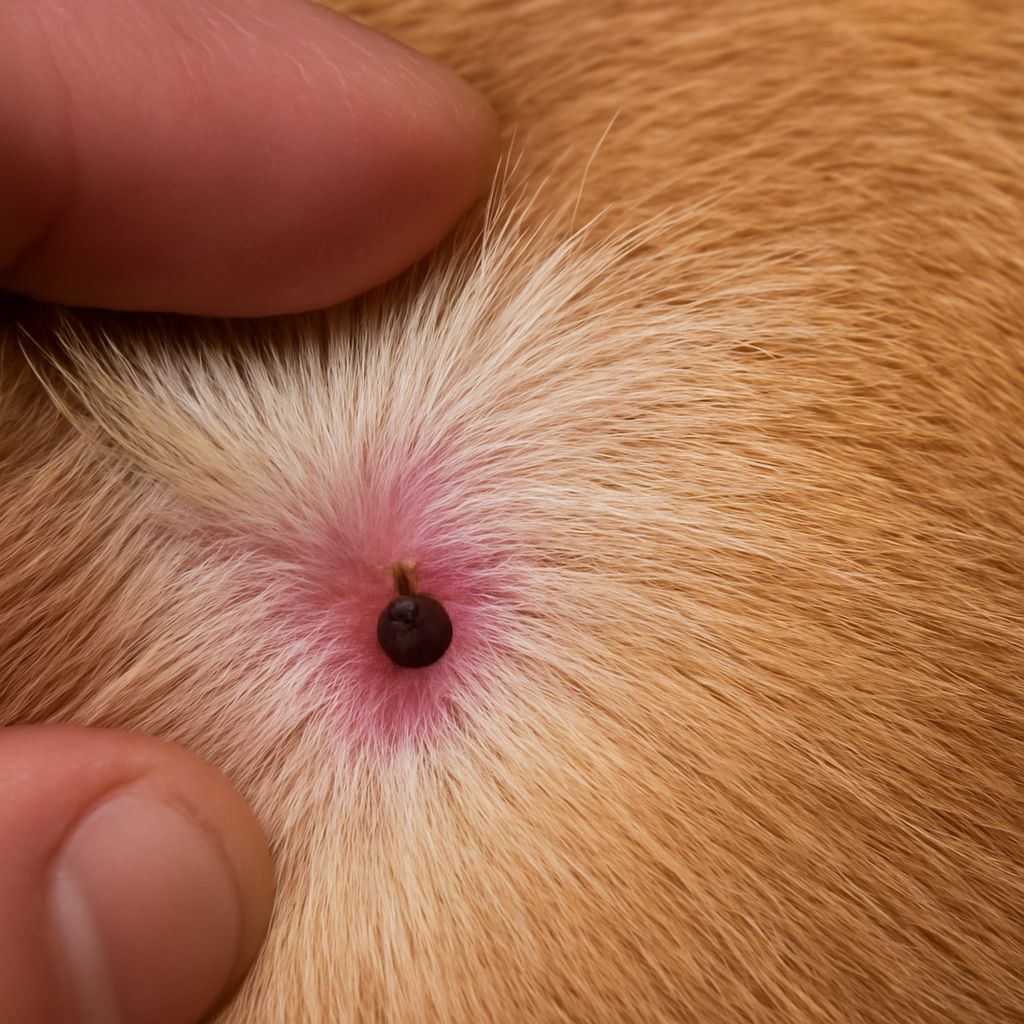
Identifying an embedded tick can be challenging, but several signs can help you spot them. Ticks often appear as small, raised bumps on your dog’s skin. Run your fingers through your dog’s fur, feeling for unusual lumps or bumps, particularly around the neck, head, and ears. An engorged tick will feel like a smooth, round pebble.
Observing your dog’s behavior can also provide clues. If your pet is persistently scratching or biting a specific area, inspect it closely for any sign of ticks. A magnifying glass might aid in identifying these parasites as they can be tiny and blend in with your dog’s fur.
What Does a Dead Tick on a Dog Look Like?
A dead tick on a dog typically appears darker and shriveled compared to a live one. After feeding, ticks often remain attached to the dog even when deceased, resembling small scabs. It’s essential to safely remove these dead parasites using a pair of fine-tipped tweezers, taking caution not to leave the head embedded, which could cause infections.
Even if the tick is dead, inspect the surrounding area for inflammation or signs of infection, such as redness or swelling. It’s also wise to monitor your dog for any changes in behavior or appetite that might signal a reaction to the tick bite.
How to Tell If Your Dog Has a Tick or a Scab
Distinguishing between a tick and a scab is critical for proper care. A scab is typically flat, rough to the touch, and may be accompanied by healed or healing skin. Ticks, however, are smooth and can be felt as irregular masses under the skin. If you’re uncertain, gently part your dog’s fur and examine the area with a flashlight.
If you suspect a tick infestation and are unsure how to proceed, consulting with a veterinarian is advisable. They can confirm whether it’s a tick or scab and provide guidance on safe removal techniques. This ensures your dog remains healthy and comfortable.
Does Your Dog Trust You? Signs to Look For
Building trust with your dog enhances your relationship and helps in managing health issues like tick removal. Signs your dog trusts you include relaxed body language, seeking your attention, and displaying a calm demeanor around you. Trust also manifests when your dog allows you to handle sensitive areas like paws and belly, where ticks often hide.
By understanding and recognizing these signs, you can work on strengthening your bond. A trusting relationship makes it easier to conduct regular tick checks and ensures your dog remains at ease during these examinations.