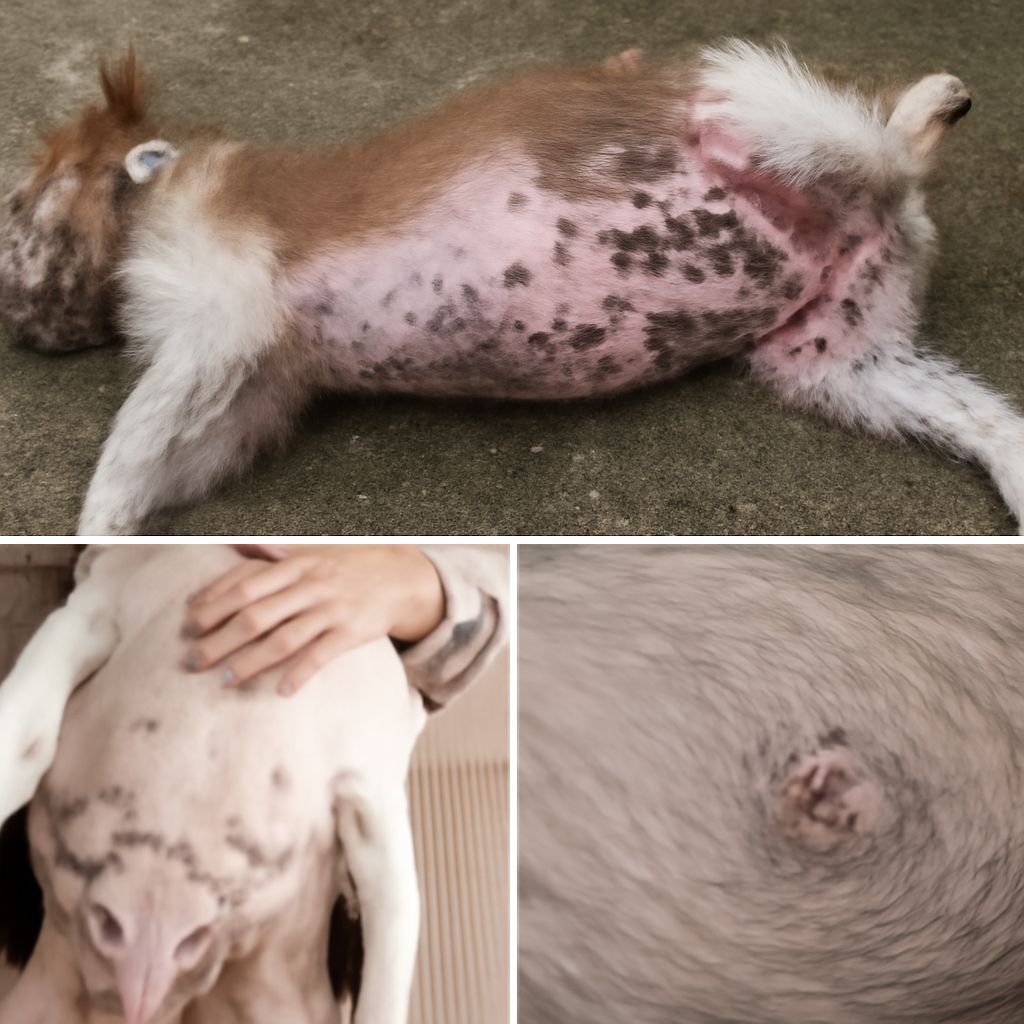
There are many myths surrounding black spots on a dog’s belly. Some people believe these spots are merely a cosmetic issue and nothing to worry about. Others might assume that all pigmentation changes are automatically a sign of severe health problems. However, understanding the true causes of why a dog has black spots on skin and may be losing hair can alleviate unnecessary concerns and help dog owners take appropriate action.
One common worry is that dog skin darkening belly issues indicate an underlying disease. While it’s true that skin color changes can sometimes point to health concerns, it’s crucial to differentiate between normal changes and those that require veterinary attention. Whether you’re dealing with dog skin turning black and itching or other symptoms, a clearer understanding can guide you in maintaining your pet’s skin health effectively.
What Causes Black Spots on a Dog’s Belly?
Black spots on a dog’s belly can appear for various reasons. In many instances, harmless hyperpigmentation is at play, especially in older dogs where skin thickens and darkens naturally over time. This form of pigmentation change is usually benign and doesn’t cause discomfort or irritation.
However, when a dog has black spots that are accompanied by hair loss or redness, it might be due to a yeast infection or a bacterial issue. These conditions often result in the dog skin turning black and itchy. Parasites, like fleas or mites, can also lead to skin irritation and subsequent darkening as the dog scratches or bites at the affected areas.
Another potential cause could be allergies. Dogs with skin allergies may develop black spots due to chronic inflammation and licking. In some cases, endocrine disorders such as hypothyroidism or Cushing’s disease can also cause dark spots on the skin, requiring medical intervention.
When Does Dog Skin Darkening Become a Concern?
While skin darkening can be benign, there are scenarios where it should not be ignored. If the dog skin darkening belly is coupled with itching, swelling, or the presence of sores, it could indicate an infection or allergy that needs treatment. Persistent changes in skin color that don’t improve or worsen should also be evaluated by a veterinarian.
Dog owners should be particularly vigilant if the black spots appear suddenly or are spreading. Additionally, if the area is painful to the touch or has a bad odor, these are signs that veterinary advice is needed. Severe conditions, like underlying endocrine disorders, may require blood tests and comprehensive care plans, which only a professional can provide.
How to Treat and Prevent Dog Skin Turning Black and Itching
Addressing the issue of a dog skin turning black and itching often begins with identifying the underlying cause. For instance, if the spots are due to a yeast or bacterial infection, your veterinarian may prescribe topical or oral treatments. Consistent grooming and hygiene practices can prevent many skin problems.
For dogs suffering from allergies, eliminating allergens from their environment or diet may help. In some cases, antihistamines or specific medications might be necessary to control allergic reactions and stop the skin from darkening further.
Preventive measures include regular veterinary check-ups to catch early signs of endocrine disorders or infections. Keeping your dog’s skin clean, moisturized, and free from parasites through proper flea and tick prevention methods is also essential. Remember, if there are severe or persistent issues, consulting a licensed veterinarian or a pet skin specialist is crucial.
Bottom line: While black spots on your dog’s belly can be unsettling, understanding the potential causes and treatments can ensure that you take the right steps for their health. Always observe any changes closely and consult with a veterinarian when in doubt. Maintaining good skin care and regular health check-ups can prevent many problems from developing.