How Old Is an Adult Dog? Age Milestones, Harness Fitting, and Frisbee Training
The question of how old is an adult dog does not have a single clean answer, and that ambiguity causes real problems for owners making decisions about training, nutrition, and physical activity. When does a dog become an adult depends heavily on breed size: toy breeds reach adulthood around 10 to 12 months, medium breeds around 12 to 15 months, and large and giant breeds not until 18 to 24 months. Knowing how to tell the age of a dog from physical indicators helps with adopted dogs whose birth records are unavailable. Getting the fit right on how to fit a dog harness matters because a harness sized for a juvenile dog may not suit the fully grown version. And learning how to teach a dog to catch a frisbee works best when the dog’s growth plates have closed, so timing matters alongside technique.
Owners who treat a 14-month giant breed as a fully mature adult often push physical training too hard too soon, risking joint damage during a period when skeletal development is still incomplete. Getting the timing right protects the dog’s long-term soundness.
Physical Maturity by Breed Size
Toy and Small Breeds
Dogs under 20 pounds typically reach physical adulthood between 10 and 12 months of age. Their growth plates close earlier, meaning their joints can handle more intensive exercise by their first birthday. Dental maturity follows a similar timeline: adult teeth are fully in by 6 to 7 months regardless of breed size.
Medium Breeds
Medium breeds, roughly 20 to 50 pounds at adulthood, mature between 12 and 15 months. These dogs often look fully grown at 10 months but still have open growth plates that can be damaged by high-impact repetitive activity. Running long distances on hard surfaces or playing fetch on concrete should wait until the vet confirms closure on radiographs if there is any doubt.
Large and Giant Breeds
Large breeds over 50 pounds and giant breeds over 100 pounds continue skeletal development until 18 to 24 months. Some giant breeds like Great Danes and Mastiffs may not reach full muscular maturity until age three. Puppy food for large breeds is formulated with controlled calcium-to-phosphorus ratios specifically to support slower, steadier bone growth. Switching too early to adult food, or feeding a small-breed formula, disrupts this balance.
Fitting a Harness and Aging an Adopted Dog
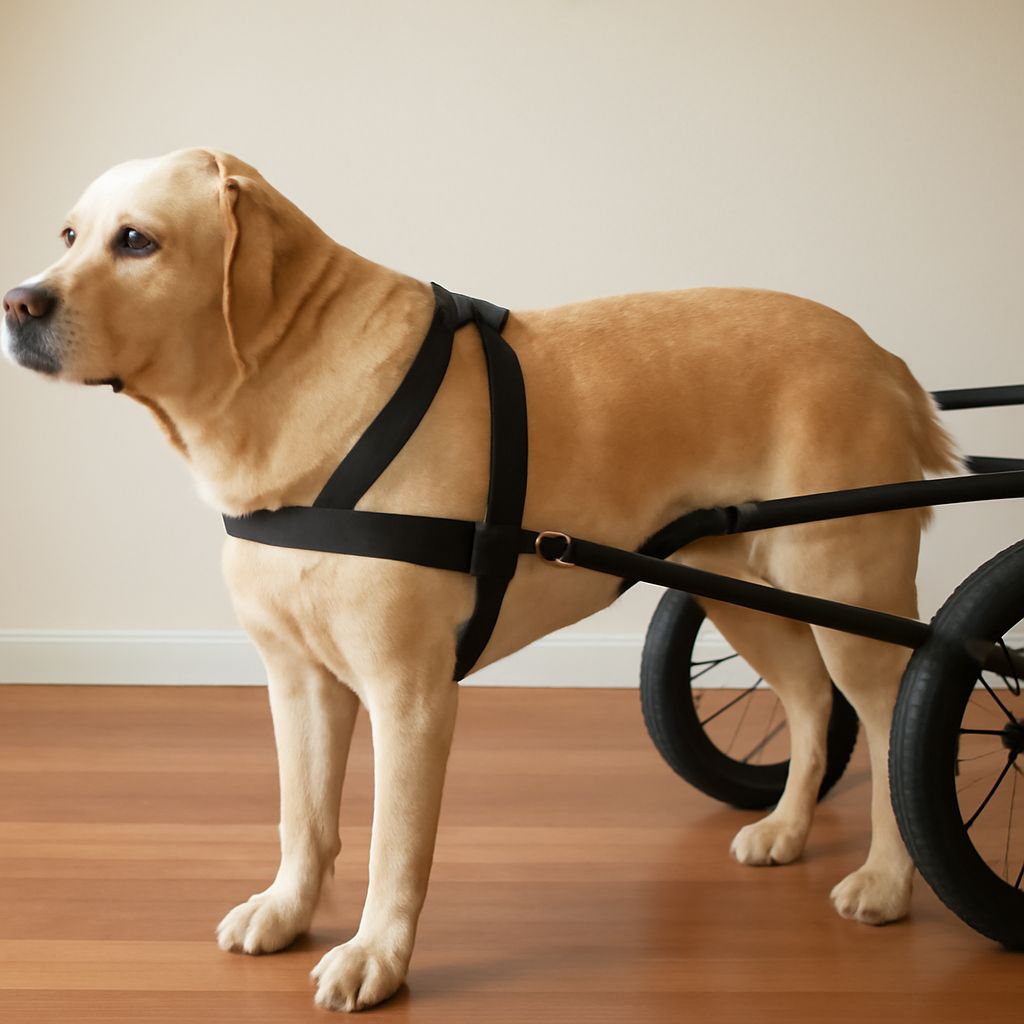
Properly fitting a harness requires measuring the dog’s girth at the widest point of the chest, just behind the front legs. The harness should allow two fingers to slide under any strap without pulling. A harness too tight restricts shoulder movement and creates gait abnormalities. A harness too loose shifts during walks, causing chafing and reducing control. As a dog completes its growth, harness fit should be rechecked every few months until size stabilizes.
For dogs of unknown age, physical indicators give a rough estimate. Teeth younger than one year are white and sharp with no tartar. Dogs between one and two years show slight yellowing and minor wear. Three to five years brings more visible tartar and moderate wear on the incisors. Beyond five years, heavier tartar, worn-down tips, and possible missing teeth are common. Eye clarity, coat texture, and muscle tone also shift with age. A veterinarian can give a more accurate age range from a full physical exam.
Teaching Frisbee After Physical Maturity
Disc catching involves jumping, lateral cuts, and abrupt stops, all high-impact on joints. For medium and large breeds, beginning disc training before 15 months risks growth plate injury. Start with low throws that require minimal jumping, building catching mechanics first. Progress to higher and longer throws only after the dog demonstrates clean catches and landing technique on flat, grassy surfaces. Dogs with a history of joint issues should be evaluated by a veterinarian before starting any jumping activity.