How to Give a Dog a Bath: A Step-by-Step Bathing Guide
Knowing how to give a dog a bath properly makes a significant difference in both the result and your dog’s experience. One common myth is that dogs need frequent bathing to stay healthy, but over-bathing strips natural oils from the skin and coat, leading to dryness and irritation. How to give your dog a bath the right way means choosing the appropriate frequency for your dog’s coat type, using suitable products, and setting up the space to reduce stress. Giving dog a bath can be straightforward with the right approach. If your dog hates bath time, specific techniques can help. And regarding how much ivermectin to give a 50lb dog, that is a veterinary dosing question entirely separate from bathing, and you should consult your vet rather than estimate on your own.
Most dogs with short to medium coats do well with a bath every four to six weeks. Dogs with oily skin or those that spend time outdoors may need bathing more often, while dogs with very dry skin may need it less. Your vet can advise on the right schedule for your individual dog.
Setting Up for a Successful Bath
Gathering Your Supplies
Before you wet your dog, have everything within arm’s reach. You will need a dog-specific shampoo, conditioner if your dog’s coat requires it, several absorbent towels, a non-slip mat for the tub or sink, a handheld sprayer or pitcher, and treats. Using human shampoo on dogs is a common mistake. Human products are formulated for a different skin pH and can cause irritation or dryness in dogs.
Preparing the Space
Place a rubber mat in the bottom of the tub or sink to prevent slipping. Slipping on a wet surface is one of the main reasons dogs develop negative associations with bathing. Check the water temperature before your dog steps in. Lukewarm water is correct. Hot water can burn sensitive skin; cold water stresses the dog and makes the process harder.
The Bathing Process Step by Step
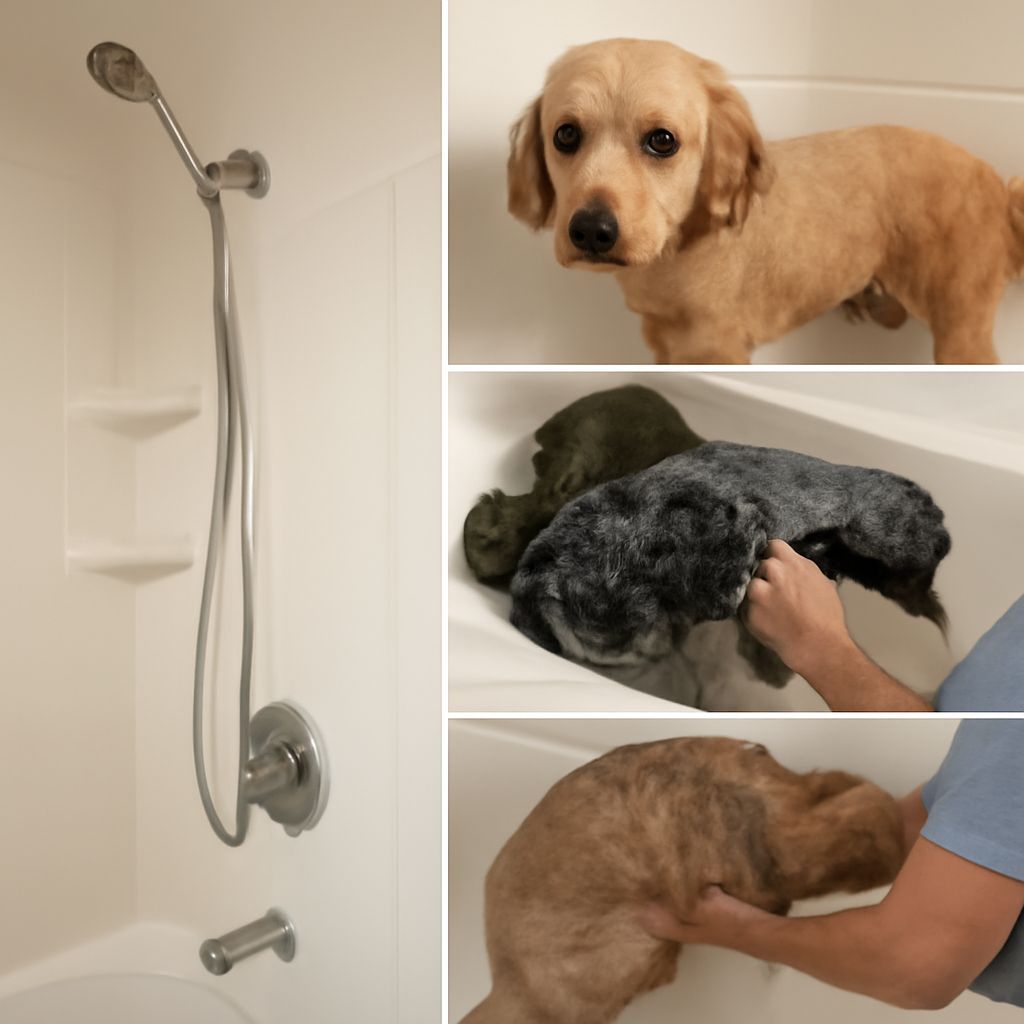
Wet your dog’s coat thoroughly from neck to tail before applying any shampoo. Work the shampoo in with your fingers using gentle circular motions, starting at the neck and moving toward the tail. Keep shampoo away from the eyes and ears. For the face, use a damp cloth rather than direct water spray.
Rinse completely. Shampoo left in the coat causes skin irritation and attracts dirt faster. A second rinse is usually worthwhile, especially for dogs with thick or double coats. Apply conditioner if needed, leave it on for the recommended time, then rinse again.
Handling a Dog That Hates Bath Time
When a dog hates bath routines, the issue is almost always rooted in a negative past experience or insufficient desensitization. Start by simply having your dog stand in an empty tub and rewarding calm behavior with treats. Over several sessions, gradually introduce the sound of water running, then the sensation of water on the paws, then a brief rinse.
Keep early baths short and positive. End before your dog shows significant stress. A bath that ends on a calm, reward-filled note builds a more cooperative association over time. Dogs that remain highly stressed despite gradual exposure may benefit from a consultation with a certified dog trainer or veterinary behaviorist before continuing attempts at home bathing.
After bathing, towel-dry thoroughly and allow your dog to dry in a warm area away from drafts. A dog dryer on a low, cool setting can speed the process for thick-coated breeds without causing heat stress.