Many owners panic when they find a lump under their dog’s skin, but a sebaceous cyst dog case is far more common than most realize. These are benign, fluid-filled sacs that form when a hair follicle or oil gland becomes blocked. They are not tumors, and the large majority do not require treatment unless they rupture or become infected. A cyst on dog paw skin is slightly different territory due to higher friction and exposure to the ground, but the underlying cause is the same.
The confusion often starts when owners read that sebaceous cyst dog rupture requires immediate action. This is partially true. A ruptured cyst needs cleaning and monitoring, but it is rarely an emergency. The concern is secondary infection, not the rupture itself. Understanding how to raise a dog with this condition means knowing the difference between a stable cyst and one that needs veterinary attention. And knowing how to treat a ruptured cyst on a dog at home can save an unnecessary urgent care visit.
Identifying Sebaceous Cysts in Dogs
What They Look and Feel Like
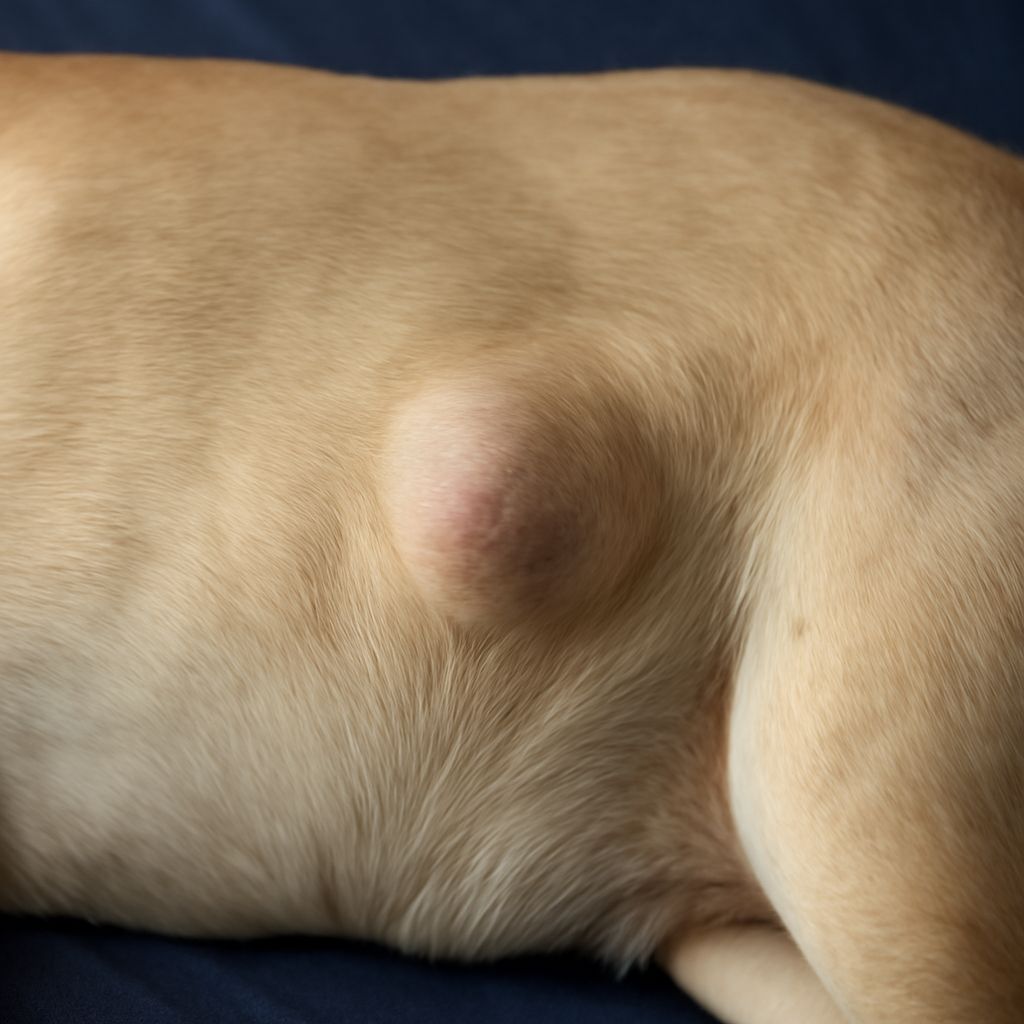
A sebaceous cyst is typically round, smooth, and moveable under the skin. It may be skin-colored or slightly white, and in some cases a small dark plug is visible at the surface. They range from a few millimeters to over a centimeter in diameter. Most appear on the back, neck, or head, though a cyst on a dog’s paw or between the toes also occurs, particularly in breeds with dense fur between foot pads.
When to Suspect Something Else
Not every lump is a sebaceous cyst. A lump that grows rapidly, feels hard and fixed to underlying tissue, or causes the dog obvious discomfort should be examined by a vet. A veterinarian can perform a fine needle aspirate to confirm the nature of the growth before any decisions are made.
Managing a Ruptured Cyst at Home
When a sebaceous cyst dog case ends in rupture, the cyst releases a thick, white or yellowish, cheese-like material. This is keratin and sebum, not pus, though it may look similar. If the area is not red, swollen, or warm, and the dog is not licking at it excessively, gentle home care is reasonable.
Clean the area with a mild antiseptic solution such as diluted chlorhexidine. Do not squeeze the cyst or attempt to remove the remaining contents by force. Apply a clean bandage if the location allows, and check the site twice daily. If the surrounding skin becomes red and hot, or if the dog develops a fever, a vet visit is needed. These are signs of secondary infection, which requires antibiotics.
For a cyst on a dog’s paw, keeping the area clean is harder. Boots or a light wrap can reduce contact with the ground while healing. Lick deterrent sprays or an e-collar help prevent the dog from reopening the wound.
Veterinary Treatment Options
A stable sebaceous cyst that isn’t causing problems can simply be monitored. A vet may recommend surgical removal if a cyst ruptures repeatedly, becomes infected multiple times, or is in a location that causes chronic irritation. Removal involves excising the entire cyst wall; if the wall is left behind, the cyst regrows.
Understanding how to treat a ruptured cyst on a dog at home is useful, but ongoing or recurring cysts should always be evaluated by a veterinarian. Key takeaways: Most sebaceous cysts in dogs are harmless. A ruptured cyst needs cleaning and monitoring for infection. Recurrent or infected cysts warrant professional removal.