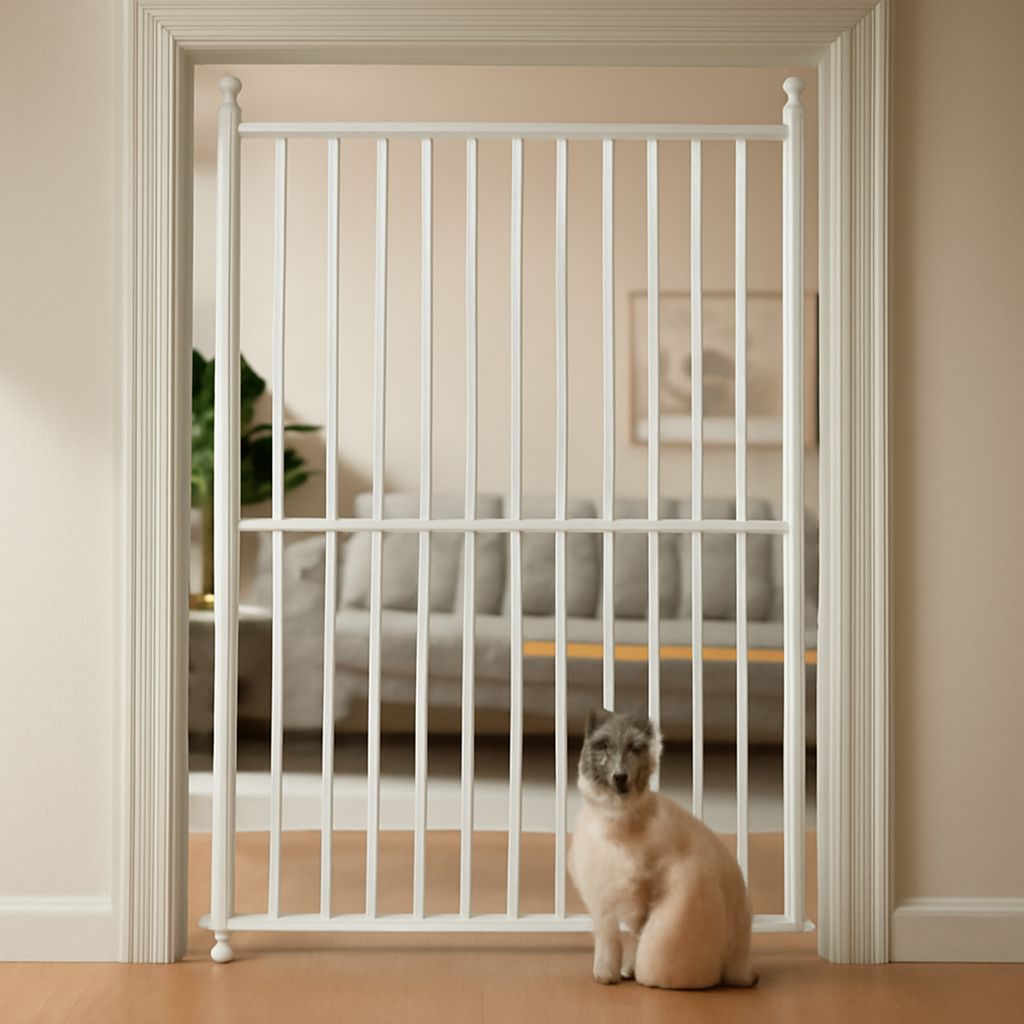
A pet gate with cat door solves a specific household problem: keeping dogs out of certain rooms while letting cats pass through freely. Many owners try a standard baby gate with pet door and find that either the door is too small for their cat, too large for containment, or placed at an awkward height. The assumption that any gate labeled “pet-friendly” works for cats is wrong. Gate height, door diameter, and latch mechanism all determine whether the setup actually functions for your animals. A gate that a determined dog can push past is useless regardless of how good it looks in the product photo.
Baby gate with pet door designs vary widely. Some use a magnetic flap that cats push with their nose; others have a sliding panel the owner must open. Pet gates for stairs require a pressure-mounted or hardware-mounted base that cannot be dislodged, since a tumbling gate on a staircase is a hazard. Pet door gate models sold specifically for cat access typically position the opening low, around four to six inches from the floor, which suits most adult cats. Pet door store options include freestanding, wall-mounted, and extension-compatible configurations to fit doorways from 24 to 72 inches wide.
Key Features to Evaluate Before Buying
Door Opening Size and Placement
Cat pass-through doors in pet gates are usually four to seven inches in diameter. A large Maine Coon or Ragdoll needs at least six inches of clearance to pass without contorting. Small kittens and elderly cats with arthritis benefit from doors positioned close to the floor, ideally no more than two inches off the ground. Some gates place the cat door at mid-panel height, which forces cats to jump, creating a barrier for older or injured animals.
Gate Height and Dog Containment Most standard pet gates stand 24 to 30 inches tall. Medium dogs such as labradors and golden retrievers can jump a 24-inch gate without much effort. A 36-inch gate contains most dogs up to 60 pounds reliably. If containment is the primary function, prioritize height over aesthetics. Walk-through gates with a step-over bar at the bottom are slightly inconvenient for humans but significantly harder for dogs to dislodge than pressure-only designs.
Mounting Style for Stairs Hardware-mounted gates bolt into wall studs or door frames and hold against a dog throwing its full weight. Pressure-mounted gates use rubber feet and tension rods to wedge between walls. Pressure mounts are not safe for stair tops because a dog’s impact can shift them sideways, creating a gap. The gate falls. For any stair application, use hardware mounting and verify the gate meets ASTM safety standards for stair use, a designation listed in the product specifications.
Installation and Daily Use Tips
Measure the opening width at three points: top, middle, and bottom. Doorways are rarely perfectly parallel. Buy a gate with at least four inches of adjustment range beyond your measured width to ensure a snug fit. Many gates come with extension panels sold separately; confirm the extensions are in stock before purchasing the base unit.
Introduce the cat to the new gate gradually. Place treats near the cat door opening for two to three days before expecting the cat to use it independently. Some cats need to see the flap held open a few times before they trust it. Dogs should be on leash during initial gate introduction to prevent them from charging and potentially damaging the door or frightening the cat. Once both animals accept the setup, the gate functions with minimal daily attention.