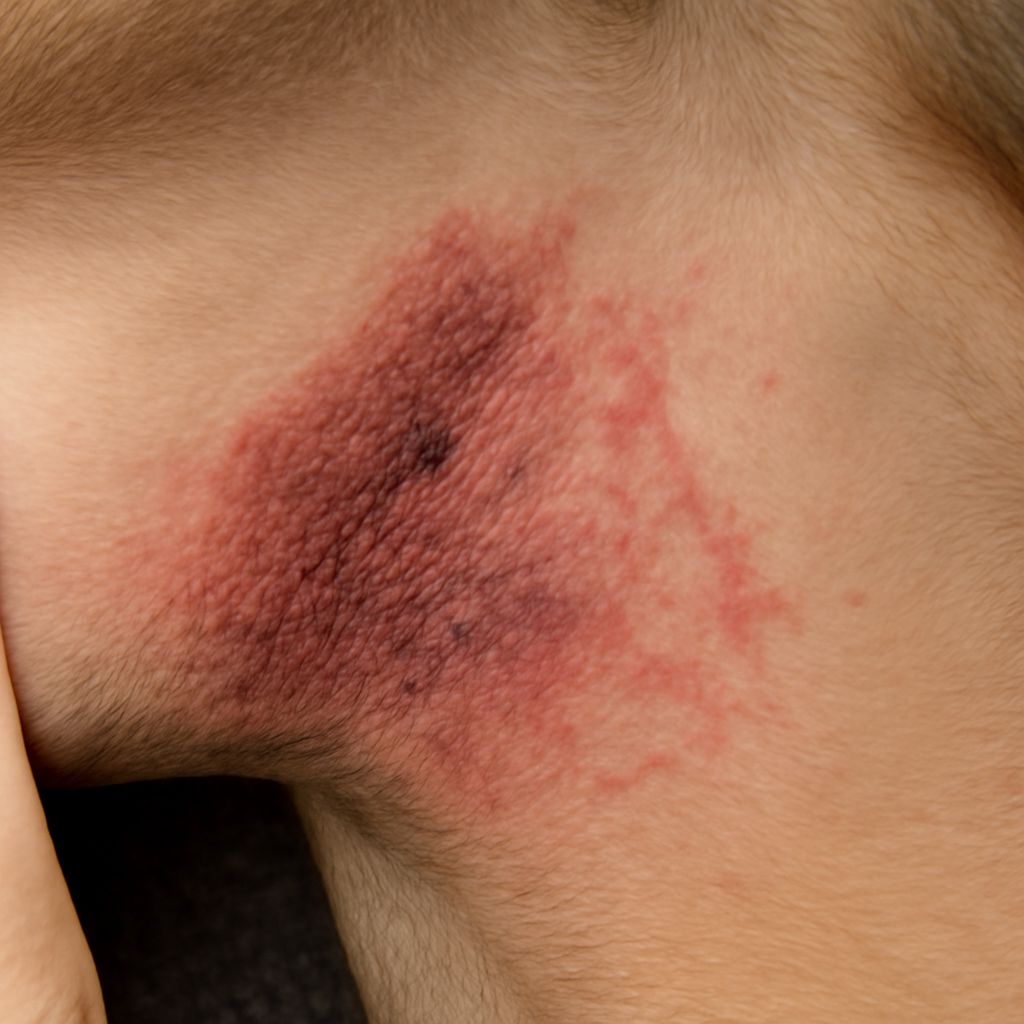
A dog rash is among the most frequent reasons owners seek urgent veterinary advice, yet the term covers a wide range of conditions with very different causes and treatments. Dog rash on groin areas — specifically the inner thighs and lower abdomen — is one of the most visible and common presentations because the skin in these areas is thin, sparsely haired, and exposed to contact irritants. A red rash on a dog can stem from allergies, contact dermatitis, bacterial infection, parasitic infestation, or fungal overgrowth — visual appearance alone is not sufficient for diagnosis. When an owner says my dog has a rash, the location, distribution, and accompanying symptoms are the critical data points a veterinarian uses to narrow the differential. Red scaly bumps on dogs, distinct from smooth flat redness, typically indicate a different class of condition including sebaceous adenitis, ringworm, or follicular infection.
Common Types of Dog Rashes and Their Causes
Allergic and Contact Dermatitis Allergic rashes in dogs can be triggered by food proteins, environmental allergens like pollen and dust mites, or contact with specific surfaces or chemicals. Contact dermatitis produces redness confined to exposed areas — belly, paws, and groin — that resolves when the triggering substance is removed. Identifying the allergen requires elimination trials for food allergies and patch testing or environmental management for environmental triggers. Antihistamines provide mild relief; atopic dermatitis often requires veterinary prescription immunotherapy or pharmaceutical management with oclacitinib or lokivetmab.
Bacterial and Fungal Skin Infections
Canine bacterial folliculitis produces red papules and pustules scattered across the trunk, often appearing where natural skin folds or friction occurs. The groin and armpits are frequently affected. Treatment requires a full course of veterinary-prescribed antibiotics — typically 3 to 6 weeks — and medicated shampoo to clear surface bacterial load. Malassezia yeast overgrowth causes a greasy, scaly rash with a characteristic musty odor, often appearing in skinfolds, ear canals, and paw interdigital spaces. Antifungal shampoos and oral antifungals are the appropriate treatment.
Red Scaly Bumps: Sebaceous and Follicular Conditions Red scaly skin lesions with a rough, raised texture often represent folliculitis, sebaceous cysts, or ringworm (dermatophytosis). Ringworm in dogs presents as circular areas of scaling and hair loss with a reddened border — a veterinarian can confirm with a Wood’s lamp examination or fungal culture. Sebaceous adenitis produces progressive scaling and follicular plugging, particularly along the dorsal midline. Treatment varies by condition and requires accurate diagnosis before initiating therapy.
When to Seek Veterinary Care
A rash that spreads rapidly, involves swelling, discharge, or ulceration, or is accompanied by systemic signs — lethargy, fever, appetite loss — requires prompt veterinary attention. Self-treating with over-the-counter human products is discouraged; many human antifungal and hydrocortisone preparations contain concentrations that are irritating or toxic to dogs. A veterinarian should evaluate any dog rash that persists beyond 48 hours or worsens despite removal of suspected contact irritants.