How to Find the Quick on Black Dog Nails Without Cutting Too Deep
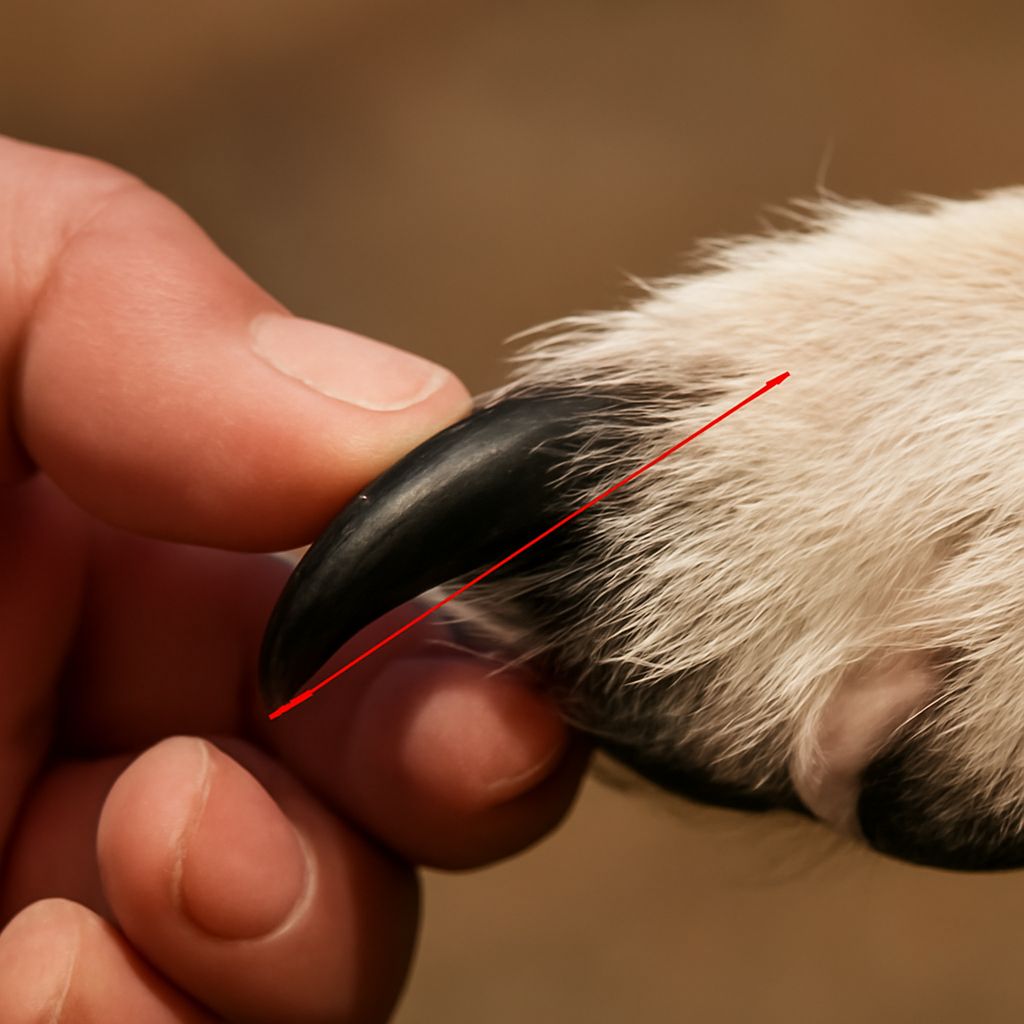
One of the most repeated pieces of nail-trimming advice is to “just go slowly” with dark nails, as if patience alone prevents cutting into the quick. Speed is not the issue — visibility is. How to find the quick on black dog nails requires knowing specific visual cues inside the nail cross-section, not just trimming cautiously. Without this knowledge, even a slow, careful cut hits the quick.
Beyond nail trimming, dog owners often encounter related health questions during routine care: what the dog pulse should be, whether a lump appeared overnight on the dog requires emergency attention, whether a guard dog on duty sign is enough deterrence, and whether the dog’s Benadryl dose could be dangerous. These questions come up regularly because routine care reveals things owners hadn’t noticed before. Can a dog overdose on Benadryl — yes, at sufficiently high doses — which is why dose confirmation with a vet matters every time.
Locating the Quick in Dark Nails
On white or light-colored nails, the quick is the pink area visible through the nail. On black nails, no such color contrast exists. The technique involves trimming thin slices from the nail tip and examining the cut surface after each slice. The nail’s outer shell is white or chalky gray in cross-section. As you trim closer to the quick, the center of the nail develops a small dark dot. That dot is the beginning of the quick. Stop at that point.
Good lighting is essential. Use a headlamp or hold the paw under a bright lamp. A sharp, high-quality nail clipper makes clean cuts — dull clippers crush the nail rather than slice it, which makes the cross-section harder to read and causes more pressure on the quick. If a dog is struggling or extremely reactive to nail trims, consult a professional groomer or veterinary technician for the initial trim and use desensitization training afterward.
Checking Dog Pulse and Basic Vitals During Grooming
Grooming sessions are a useful time to check a dog’s pulse. A normal dog pulse rate is 60-140 beats per minute, with smaller dogs on the higher end. Find the femoral pulse by pressing gently on the inner thigh where the leg meets the body. Count the beats for 15 seconds and multiply by four. A pulse that is very rapid, very slow, or irregular warrants a veterinary check.
At the same grooming session, run your hands over the dog’s body. If a lump appeared overnight on your dog, note its location, size, and texture. Most sudden lumps are benign — lipomas, cysts, or insect bites. But any lump that grows rapidly, feels warm, causes pain, or appears with other symptoms should be evaluated by a vet promptly. Do not wait to see if it resolves on its own.
Benadryl Safety and Common Dose Questions
Diphenhydramine — the active ingredient in standard Benadryl — is sometimes recommended by vets for mild allergies or travel anxiety in dogs. The standard dose for dogs is 1 mg per pound of body weight, given two to three times daily. Formulations containing xylitol, decongestants, or alcohol are toxic to dogs — read labels carefully. Can a dog overdose on Benadryl? Yes. Signs of overdose include extreme sedation, rapid heart rate, urinary retention, and seizures. Any suspected overdose is an emergency. Contact animal poison control or an emergency vet immediately.