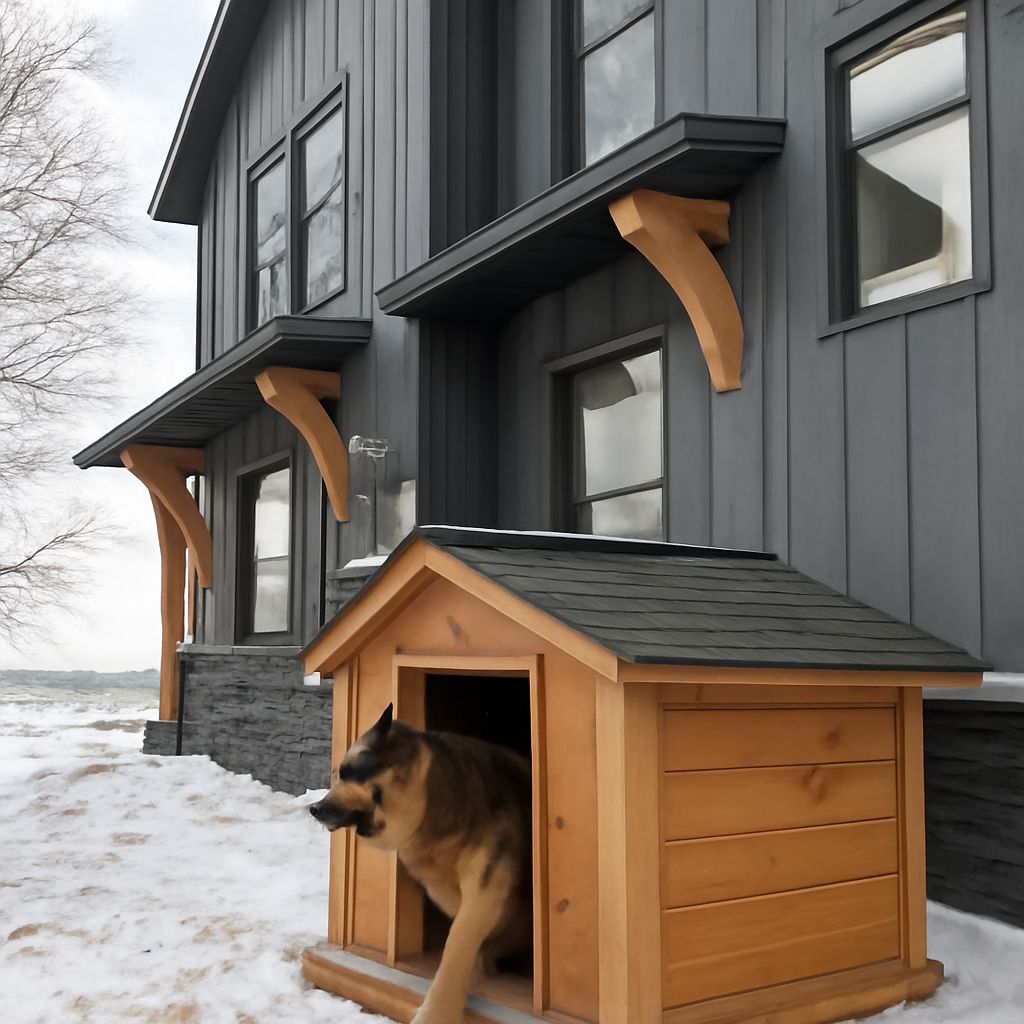
Modern Dog House Designs: From Porch Features to Cold Weather Builds
The image of a plywood box with a hole cut in the front has little to do with contemporary outdoor dog shelters. A modern dog house is designed with insulation, ventilation, and ergonomics in mind — features that directly affect whether a dog actually uses it and stays healthy through seasonal temperature swings. The idea that any enclosed space qualifies as adequate shelter is worth setting aside before choosing a design.
A dog house with porch adds an outdoor resting area that protects against direct sun and light rain while giving the dog visual access to the yard. A 2 story dog house works for smaller breeds but rarely suits large dogs that cannot navigate ramps safely. A cold weather dog house requires wall insulation, a raised floor, and a wind-blocking door flap. For bigger breeds specifically, a large breed dog house needs enough interior space for the dog to stand, turn around, and lie stretched out. Size, insulation, and materials determine function — aesthetics come second.
Choosing the Right Size
Interior Dimensions
The interior should be 25% larger than the dog’s body length from nose to base of tail. Height should allow the dog to stand without ducking. Going too large in cold climates is a mistake — the dog’s body heat warms the interior, and excess space means the shelter stays cold. For a large breed dog house, the interior floor area typically runs 36 by 48 inches minimum for breeds like Labradors or German Shepherds.
Elevation and Flooring
Raising the floor 2 to 4 inches off the ground prevents moisture wicking, reduces cold transfer from the ground, and discourages insects from nesting underneath. Cedar flooring naturally repels insects and handles moisture better than untreated pine. Rubber mat liners add insulation and comfort inside a modern dog house without trapping moisture.
Cold Weather Features
A cold weather dog house needs wall insulation between R-5 and R-11 depending on the climate. Rigid foam board between interior and exterior wall panels is the most practical approach for DIY or manufactured shelters. The entrance should face away from prevailing winds. A heavy-duty vinyl door flap cuts drafts while still allowing easy entry. Heated pad inserts rated for outdoor use provide additional warmth for senior dogs or short-coated breeds in harsh winters.
Avoid heating lamps or exposed electrical elements inside the shelter — these are fire hazards. Purpose-built low-wattage heated pads with chew-resistant cords are the safer option.
Porch and Multi-Level Designs
A dog house with porch typically adds 6 to 12 square feet of covered outdoor platform to the main shelter. This space works well for dogs that spend extended time outside — they can rest in shade without tracking into the insulated main chamber. Some modern designs integrate the porch beneath an elevated sleeping loft, creating a 2 story dog house layout. These suit small to medium dogs; large breeds need single-level structures with enough interior floor space to lie fully extended.
Bottom line: Match shelter size precisely to your dog’s measurements, prioritize insulation for cold climates, and choose a design your specific breed can enter and exit comfortably. A large breed dog house built with the right dimensions and materials will serve reliably for years with minimal maintenance.