Homemade Dog Ear Cleaner: Safe Recipes and What to Avoid
A homemade dog ear cleaner can be a practical tool for routine ear maintenance, but it is not a substitute for veterinary treatment when an infection is already present. Many owners reach for a dog ear cleaning solution diy approach because commercial products can be expensive or contain fragrances their dogs react to. That instinct is reasonable, as long as the recipe is genuinely safe. The most common homemade remedy for smelly dog ears involves diluted white vinegar, which alters the pH of the ear canal and makes it less hospitable to yeast. Used correctly, this is one of the few home approaches with real supporting logic behind it.
The myth worth addressing upfront: rubbing alcohol, hydrogen peroxide, and tea tree oil are often suggested online as a natural dog ear cleaner, but all three can damage delicate ear tissue or cause toxicity. Stick to approaches that a veterinarian would not object to. For dogs with recurring or painful ear problems, the right move is a vet exam before applying anything at home. How to clean dog ears naturally works best as preventive care, not as a treatment for established infections.
Safe Homemade Ear Cleaning Solutions
White Vinegar and Water Rinse
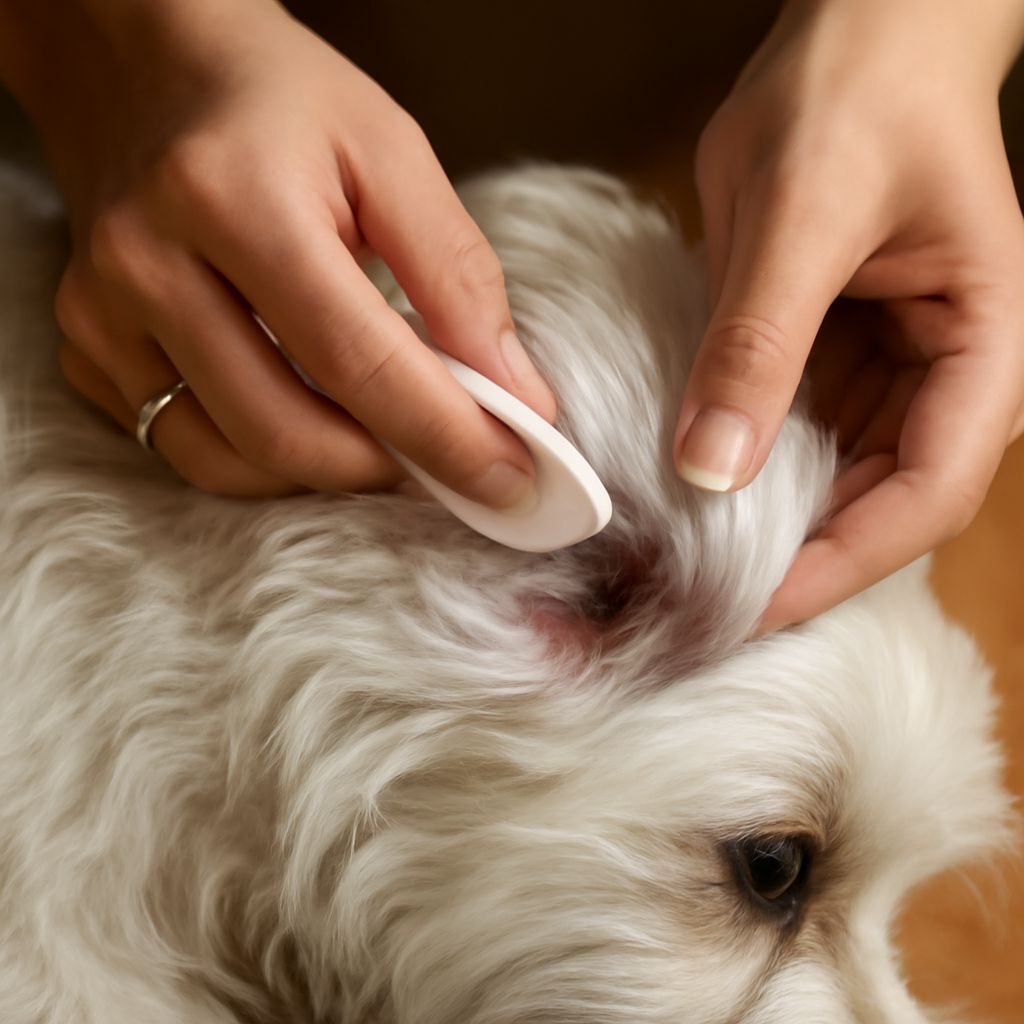
A 50/50 mix of plain white vinegar and distilled water is the most widely used dog ear cleaning solution for home use. The mild acidity discourages yeast and bacteria from thriving. Apply a small amount to a cotton ball and wipe the outer canal and the inner surface of the ear flap. Do not pour the solution directly into the canal, and do not probe deeper than you can see. This rinse works well as a weekly maintenance step for dogs prone to mild wax buildup or mild odor between veterinary check-ups.
Some groomers add a few drops of isopropyl alcohol to help the solution dry faster after application, but this is not necessary and is best avoided for dogs with any existing redness or sensitivity in the ear.
Witch Hazel Wipes
Alcohol-free witch hazel on a cotton pad is a gentler alternative to the vinegar rinse. It removes surface debris and has mild astringent properties that reduce moisture. This is particularly useful for floppy-eared breeds where air circulation is limited and moisture accumulates more easily. Witch hazel wipes are a practical part of a natural dog ear care routine between professional grooming appointments.
What to Avoid in DIY Ear Cleaning
Several popular online suggestions cause more harm than they prevent. Hydrogen peroxide breaks down healthy tissue in the ear canal and should not be used on dogs. Rubbing alcohol at full strength burns irritated skin and can damage the delicate lining of the canal. Tea tree oil is toxic to dogs if absorbed; even diluted concentrations applied near the ear pose a risk, particularly in small dogs.
Cotton swabs are another common mistake. They push debris deeper rather than removing it. Cotton balls or gauze pads, used to wipe only the visible parts of the ear, are the correct tool.
Safety recap: Only apply a homemade ear cleaner to visibly healthy ears with no active discharge, swelling, or odor beyond mild wax. Any ear that smells strongly, shows dark debris, appears red, or causes your dog significant discomfort needs a veterinary evaluation before any home treatment. A vet can rule out a ruptured eardrum, which makes any ear-cleaning solution dangerous to use.