Dog Ear Wax: What Color, Smell, and Amount Mean for Your Dog
Dog ear wax is normal. Every dog produces it, and a small amount of light-brown or yellowish wax is the ear canal doing its job. The problem is that many owners either ignore ear buildup entirely or overcorrect with cleaning routines that strip the ear of protective oils and invite more trouble. Dog ear wax removal should happen when there’s a visible problem, not on a fixed weekly schedule.
The type of wax your dog produces matters. Dog ear wax color tells you a lot: pale tan is healthy, dark brown or black wax points to yeast or bacterial overgrowth, and reddish-brown wax combined with a bad smell usually means infection. Using peroxide in dog ears without knowing what you’re treating can make things worse, and a homemade dog ear cleaner hydrogen peroxide solution is not appropriate for infected tissue. This article covers what’s normal, how to spot problems early, and how to clean ears safely.
What Normal and Abnormal Ear Wax Looks Like
Healthy ears have a small amount of pale or golden wax with no odor. This waxy buildup traps debris and moves it out of the canal naturally. When you lift your dog’s ear flap and see a thin coating of light-colored wax, you’re looking at a normal, functional ear.
Dark wax, heavy discharge, or wax with a yeasty or foul smell signals a problem. Black, crumbly debris often means ear mites, particularly in younger dogs or those with outdoor exposure. A dark brown discharge with a musty odor suggests a yeast infection. Pale yellow fluid or pus with swelling points to bacterial infection. The color and texture of ear secretions are your first diagnostic tool before any cleaning or treatment starts.
Dogs with floppy ears, dogs that swim regularly, and dogs with allergies produce more wax than average. Their ear canal environment stays humid, which encourages yeast growth. Check these dogs’ ears weekly so you catch changes early.
Safe Ear Cleaning at Home
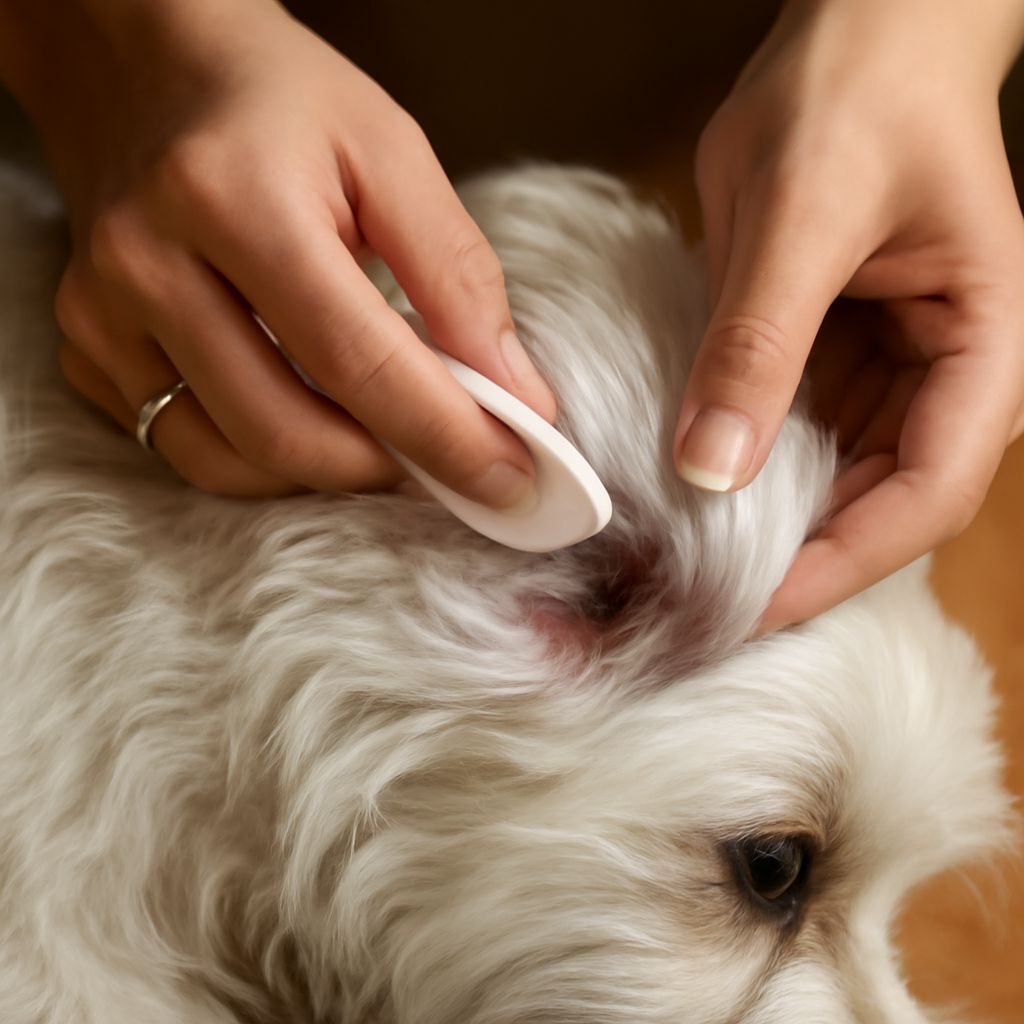
For routine maintenance, use a veterinarian-approved ear cleaning solution. These are formulated to break down wax, dry out moisture, and maintain a healthy pH. Saturate a cotton ball or gauze, wipe the visible inner ear flap and the opening of the canal, then let the dog shake its head. Do not push cotton swabs into the canal.
A common question is whether peroxide in dog ears is safe. The short answer is: not for routine cleaning. Hydrogen peroxide can irritate healthy tissue, and on broken or inflamed skin it delays healing. Some vets use diluted peroxide to loosen crusted debris before a clinic flush, but that is not the same as unsupervised home use.
Similarly, a homemade dog ear cleaner made with hydrogen peroxide is risky unless your vet has approved the formula and confirmed there is no active infection. A safer DIY option for mildly waxy ears is a 50/50 mix of distilled water and white vinegar, applied sparingly on the outer surface only. If your dog’s ear is red, swollen, or producing heavy discharge, stop and see a vet before cleaning further.
When to See a Vet
Head shaking, pawing at the ear, tilting the head to one side, or crying when the ear is touched all signal pain that goes beyond simple wax accumulation. Recurring ear infections need a culture test to identify the specific bacteria or yeast involved so the right medication can be prescribed.
Bottom line: ear wax color and texture give you an early warning system. Light and minimal is healthy. Dark, heavy, or smelly needs professional assessment. Routine cleaning helps, but the right product and technique matter more than frequency.