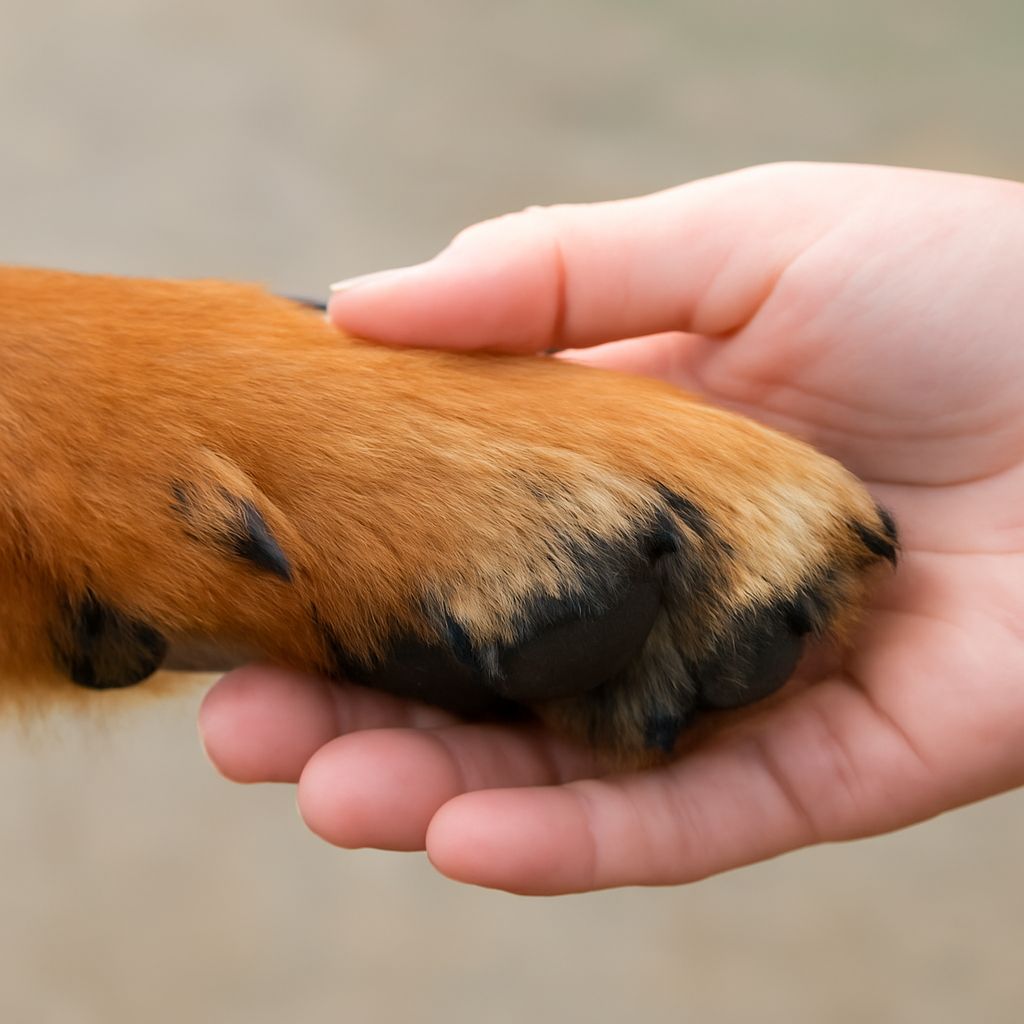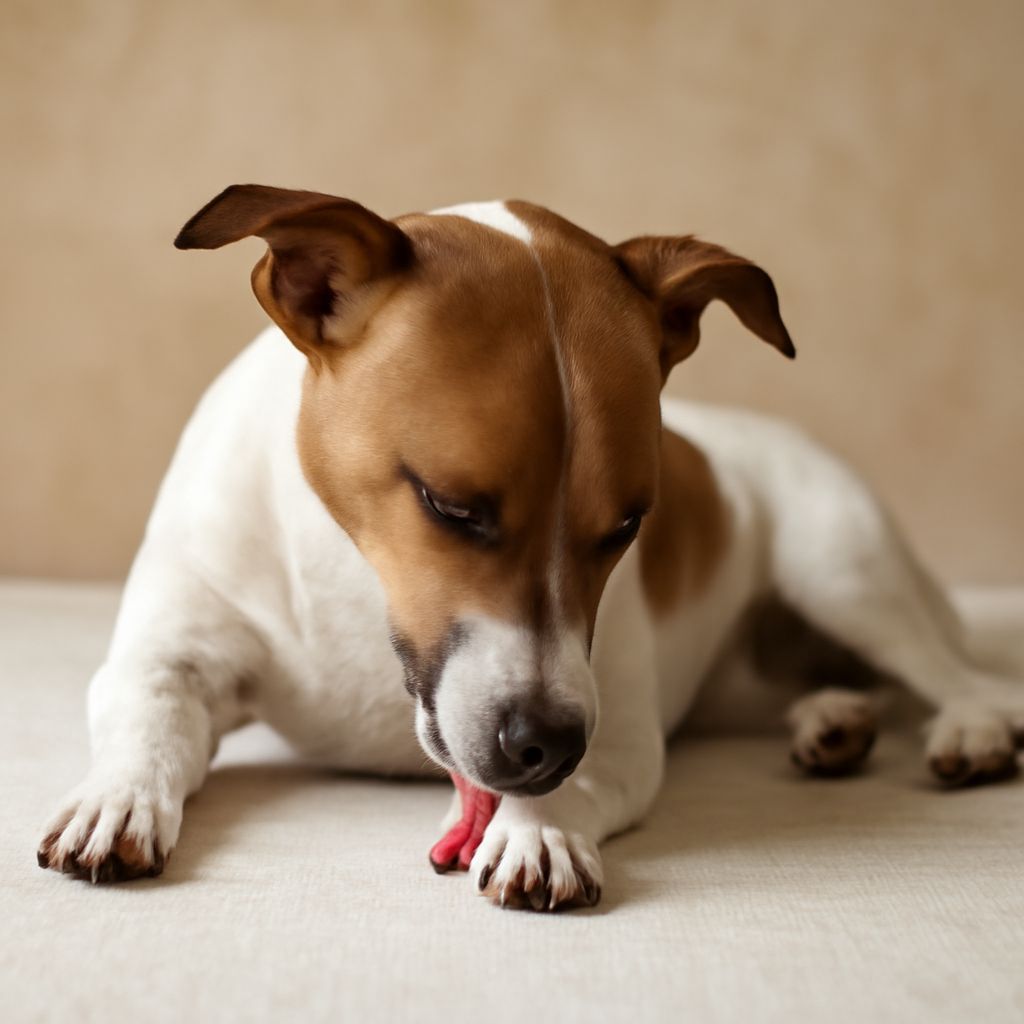
Paw licking in dogs is normal behavior, but dog licking paws raw is a sign something is wrong. The distinction matters. A dog that briefly cleans its paws after a walk is fine. A dog where you can’t figure out how to get dog to stop licking paws, and who licks persistently until the skin becomes red, inflamed, or broken, has a problem that needs addressing. Licking to that degree causes more damage than the original irritant and creates a cycle that’s hard to break.
Dog wont stop licking paws in many cases comes down to one of three categories: allergies, infection, or anxiety. My dog wont stop licking his paws behavior is not a quirk or personality trait. It’s a response to something uncomfortable. And how to stop dog from licking paws raw starts with identifying which of those three is driving the behavior, because the approach differs for each.
Common Causes of Excessive Paw Licking
Allergies
Environmental and food allergies are the most common reason a dog licks its paws to the point of irritation. Grass pollen, mold, dust mites, and certain proteins in food all trigger allergic responses that often show up in the feet, face, and ears. A dog that starts licking paws seasonally usually has environmental allergies. One that licks year-round with no clear trigger may have a food allergy.
A vet can help determine which is more likely through elimination diets or allergy testing. Rinsing the paws with water after outdoor walks removes surface allergens and often reduces seasonal paw licking significantly.
Infection
Raw paws create openings for bacteria and yeast. The pink or rust-colored staining between the toes in light-coated dogs often signals a yeast infection, which itself causes intense itching. Bacterial infections produce swelling, discharge, and a foul smell. Both require veterinary treatment, typically antifungal or antibiotic medication, topical or oral depending on severity.
Anxiety and Compulsive Behavior
Some dogs lick their paws as a coping mechanism for stress, boredom, or anxiety. This is particularly common in dogs that are under-exercised, left alone for long periods, or experiencing a change in routine. The licking releases endorphins and becomes self-reinforcing. A dog wont stop licking paws even when there’s no physical irritant present in these cases.
How to Stop Your Dog from Licking Paws Raw
Immediate Management An e-collar or recovery suit prevents access to the paws while you identify the cause. This is not a solution, but it breaks the lick-irritate-lick cycle long enough for the skin to begin healing. Lick deterrent sprays with bitter taste work on some dogs and not others.
Keep paws clean and dry. Moisture between the toes encourages yeast growth, so dry thoroughly after washing, especially between the toes. A soft cloth or a low-heat dryer on a brief setting works well.
Addressing the Root Cause
How to stop dog from licking paws raw long-term requires treating whatever is driving the behavior. For allergies: work with a vet on antihistamines, prescription allergy medication, or an elimination diet trial. For infection: complete the full course of prescribed medication even after symptoms improve. For anxiety: increase structured exercise, consider environmental enrichment, and consult a veterinary behaviorist if the compulsive behavior is severe.
My dog wont stop licking his paws behavior that has been going on for weeks without improvement needs veterinary evaluation. Chronic paw licking leads to thickened, discolored skin and recurring infections that become progressively harder to treat. Key takeaways: Paw licking to the point of rawness signals an underlying problem, not a habit. Identifying the trigger, whether allergy, infection, or anxiety, determines the right response. Early treatment prevents the skin damage from compounding.